
Hungry? Pull Over. Here’s Your Guide to the Best Bets of Roadside Foraging
All along the roadways of America—and the world—there’s figs, avocados and wild berries ripe for the picking
/https://tf-cmsv2-smithsonianmag-media.s3.amazonaws.com/accounts/headshot/Off-Road-alastair-bland-240.jpg)
/https://tf-cmsv2-smithsonianmag-media.s3.amazonaws.com/filer/20120710094032ForagingKingsSMALL.jpg)
There is no fruit quite like a fresh fruit. Picked ripe and eaten immediately, fresh fruits exhibit the vibrant sugars and zesty acids that make them so attractive to foraging creatures and a key element in their evolutionary strategy. But fresh-picked fruit is generally unavailable to most of us. That’s because farmers usually harvest their stone fruits, berries, figs and other delicate seasonals well before they’ve even ripened. Then, the pickings spend a week or more in transit, finally arriving in the grocery store dull as a billy-clubbed mahi mahi, often mushy or pithy and a sad exhibition of their species’ full potential. Even sadder is that fact that we consumers must take what we can get, and we live our lives buying and eating this sub-prime fruit.
Unless, that is, we hit the road and take matters—and super-fresh fruit—into our own hands. All along the roadways of America, and the world, fruit trees grow within reach of passersby, and about now, as summer heats up, these trees are loaded—and their abundant branches are hanging over a fence near you. Here’s a list of best bets for roadside foraging this July:
Loquats. The orange color and the suffix “quat” (think kumquat) lead many people to assume that the loquat is a citrus fruit—but it’s not even related. A native of East Asia and a favorite summer snack in Europe, Japan, Israel and Brazil, the loquat in America is common yet just as obscure. Many homeowners are unaware that the fruits, growing in their own yards, are even edible—which is good news for you and me. That means you can knock on the door, ask permission and, almost without fail, receive the go-ahead to “take all you want.” Some homeowners may appear baffled and say, “Those are edible?” Yes—fantastic, in fact, and surely one of the most under-appreciated garden fruits. When picking loquats, leave a quarter-inch of stem attached to each fruit, which will reduce bruising, and carry them home wrapped in a sweat shirt for padding. Peel the skins and savor the sweet, juicy, zesty flesh. If you have a real bounty to work with, try juicing a portion and making loquat cider.
Avocados. The fact that avocados, one of the most recognized and desired tree fruits, can be had for free along public roadways is simply wonderful. NOTE: This is NOT an invitation to plunder an orchard, which is illegal, taken seriously by Southern California law enforcement agencies and could land you in jail. Rather, this is simply a reminder to cyclists and pedestrians south of Santa Barbara to watch the roadsides for avocado trees, and, when you see one, look to the ground below, or in the culvert along the road. These are the places where ripe avocados go—and if you don’t get them, the rodents will. Avocado trees, happily, fruit almost all year.
Figs. The bulk of the year’s figs arrive in late summer and fall, but many varieties of the fruit produce an early crop, as well—physiologically distinct from the main crop of September. Called the “breba” crop, this first flush of figs usually consists of fewer fruits than the longer-lasting autumn crop—but not always, and in some places, and with certain fig varieties, a bounty of breba figs may weight the tree branches toward the ground. The black mission fig, one of the main commercial and garden varieties of California, produces a heavy breba crop in June and July. So does the desert king, a jammy, juicy green variety. Countless fig trees grow wild or feral along small rural roadways and can be easily and safely accessed. Texas and other states of the South offer good fig-hunting opportunities, too—and Southern Europe is a fig hunter’s heaven, especially in the fall. Breba crop figs grow from the old-growth wood of the previous year, and so they may often be concealed by summer foliage. Push back the leaves and behold the whoppers. Only take them if they’re splitting, sagging and dripping with juices, as figs will not ripen once picked.
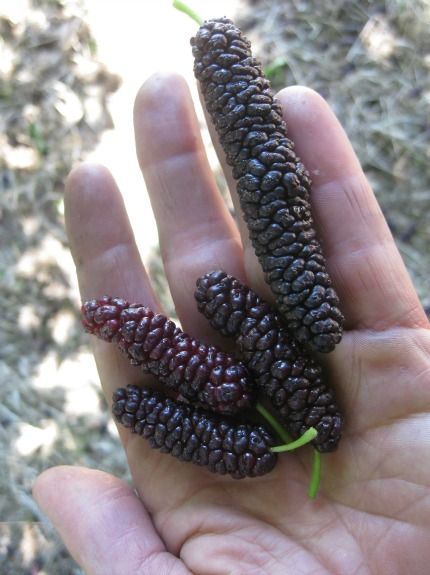
Mulberries. An Old World native grown in America largely as a shade tree, the mulberry is a prolific producer and one of the most under-appreciated of tree fruits. Some mulberry varieties are cotton-candy pink, while others are purple, and others jet black—and all, when ripe, are pure sweetness, lacking the tannins that make blackberries and other thorny bush-berries so often bitter and sour. In nations around the Mediterranean, mulberries are loved, cultivated and often eaten dried, like raisins. In many places, fallen mulberries carpet the pavement a half-inch thick during July. In California and the rest of America, most trees are of non-fruiting varieties—often planted along paths and roadways as shade trees—but those bearing berries begin to drop their crop in June. Cyclists have a great advantage in hunting the mulberry, able to cover large distances but moving slowly enough to watch the asphalt; when you see dark stains of splattered fruit on the ground, hit the brakes and look up.
Blackberries. A no-brainer, blackberries are probably America’s favorite wild fruit. The Himalayan blackberry is also one of the most hated invasive species ever to leave its Old World homeland. Introduced in 1885 to Sonoma County by fruit breeder Luther Burbank, the species now grows in wicked bramble patches across the continent, and the world. Road crews and property owners attack the vines with chain saws, but there’s no stopping this thorny invader—and every July and August, it’s pie time. America also has a native blackberry, with gentler thorns than the Himalayan and bearing slender, elongated fruits about a month earlier, beginning in June. Blackberries fall in the genus Rubus, which also includes raspberries, salmonberries and thimbleberries. Blueberries and huckleberries are also a summertime crop, and an easy one to forage.
Wild Plums. Remember the chapter in Michael Pollan’s Botany of Desire when he visits Kazakhstan’s wild apple forests and describes the fantastic abundance and diversity of the fruit, and the forest floor littered with a rainbow-colored layer of apples? Well, in parts of coastal California, the abundance of wild plums is almost as tremendous. Plum trees—growing wild, sprouted from seed—cover mountain slopes and bear fruits of a dozen colors. A quick skirmish with the brambles, and you’re among the trees. Taste through them until you find the best. TIP: You’ll find that the plums fallen and hiding in the grass are exceptionally sweet, ripened by days in the sun. Enjoy them on the spot, or take them home to make jam—or even wine. Planning on going Down Under? Then watch along the roads of New Zealand, where plums grow as wildly as in California.
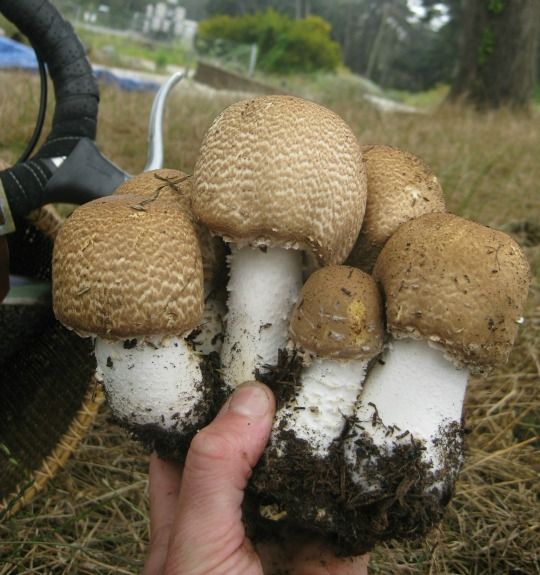
The Prince Agaricus mushroom. A fungus fruit, the prince is one of the very best edible mushrooms, with a smell and flavor like almond extract that will knock almost any foodie to his knees as he begs you to tell just where you found these incredibly delicious things. Don’t tell—just share, and perhaps offer the basic scoop: The prince, Latin name Agaricus augustus, is a close relative of the cultivated portobello mushroom. Many other species in the genus are good to eat, as well—but the prince is the king. The mushroom is a summer fruiter, often occurring in areas touched by fog drip or in parks wetted by sprinklers. The mushrooms like to grow in disturbed soils—and right beside roadways is a great place to look. I’ve even encountered the prince while cycling through Bulgaria and Greece. Unsure I had met my old friend so far from home, I smelled the cap—and that almond-anise aroma left no doubt. When the mushrooms are barbecued, the sweet juices of the prince come out sizzling. The texture remains firm—never slimy—and the flavor is a knockout. Try dipping prince slices in egg, then sautéing and serving with a drizzle of maple syrup for mushroom French toast. NOTE: Do not forage mushrooms if you don’t know what you’re doing. This blog post is not to be used for identification purposes.
Don’t know where to start? Fallen Fruit serves as a foraging resource and a guide to collecting fruit from public trees in Los Angeles and beyond. Another group, based in the San Francisco Bay Area, calls itself Guerrilla Grafters and stalks the streets, grafting branches of prized fruit varieties onto non-fruit-bearing sidewalk trees with the goal of cultivating a free food resource for public use. How cool is that?
/https://tf-cmsv2-smithsonianmag-media.s3.amazonaws.com/accounts/headshot/Off-Road-alastair-bland-240.jpg)