
Adorable Photos of the National Zoo’s Rare Maned Wolf Pups
For the first time in two years, a litter of the South American mammals was born at the Smithsonian Conservation Biology Institute
/https://tf-cmsv2-smithsonianmag-media.s3.amazonaws.com/accounts/headshot/ATM-aviva-shen-240.jpg)
/https://tf-cmsv2-smithsonianmag-media.s3.amazonaws.com/filer/20120131020002wolfpup-zoo-baby-1-small.jpg)
All together now: Awwwww!
Today the Smithsonian Conservation Biology Institute (SCBI), the Zoo’s research facility in Fort Front Royal announced the births of four maned wolf pups. The pups were born on January 5 and have been kept under close watch by zookeepers ever since. This is the first litter in two years, as the South American species is extremely difficult to breed in captivity. “They’re very shy and get stressed,” says Nucharin Songasen, a SCBI research biologist working with the pups. ”The mom tends to move the pups a lot, which can hurt them, and sometimes they do end up eating the pups. This year, one female gave birth to three pups and she ended up eating all of them.”
So the SCBI researchers are keeping their distance while the mother, 8-year-old Salina, nurses the pups and moves them from den to den. They were a little concerned when she left one of the pups, a male, in a different den from the others. “The mom usually doesn’t want to spend energy taking care of the pups that are not doing well,” Songasen explains. “But he is very fat and strong, so we think maybe he’s really aggressive and she’s trying to give the others a chance to nurse.” When the male pup got left out, his father, Nopal, picked up the slack and cared for him until his mother returned. “The father has a big role in taking care of the young,” Songasen says. “The first six weeks the mom will take most of her time with the pups, but when they start running around and leave the den, the dad provides a significant role in providing food for the pups and protecting them.”
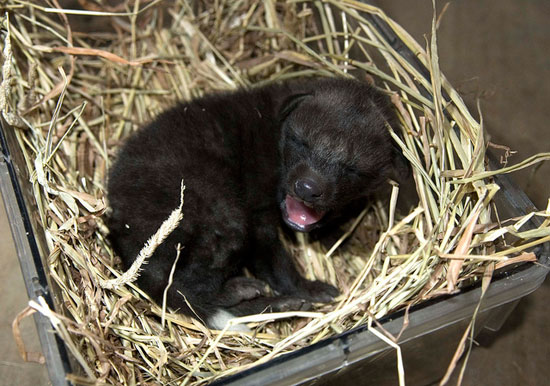
Photo by Lisa Ware, Smithsonian Conservation BIological Institute
These four little furballs are good news for the maned wolf population: there are only about 20,000 of them left in the wild and their natural habitat is shrinking due to human encroachment in Argentina, Bolivia, Brazil, Paraguay and Peru. According to Songsasen, 80 percent of their habitat has already been converted to farmland, and only 5 percent of the remaining territory is protected. This leaves the wolves very vulnerable to conflict with farmers and other people in the area.

Photo by Lisa Ware, Smithsonian Biology Conservation Institute
Out of the four breeding pairs at SCBI, this is the first to successfully produce a litter. Currently, the breeding habits of the maned wolf are something of a mystery to scientists. The SCBI is working in conjunction with 18 other institutions researching the effect of plant-based diets on the wolves’ reproductive rates. “In the past two years, we’ve had young wolves die from intestinal disorders. Right now we don’t know what the optimal diet is. This species has very sensitive digestive tracts, and this might be another reason why they have reproductive problems,” Songasen says. These four pups bring the SCBI’s population up to 12; you can see two of them at the Zoo in the Cheetah Conservation Station.
In the meantime, take some time out of your afternoon to squeal over the just-released wolf pup photos.
/https://tf-cmsv2-smithsonianmag-media.s3.amazonaws.com/accounts/headshot/ATM-aviva-shen-240.jpg)