May 31, 2012
Fate of Auctioned Tarbosaurus Yet to be Determined
![]()
What will become of the auctioned Tarbosaurus skeleton? Paleontologists have been wondering about the illicit dinosaur’s fate ever since it was sold for more than a million dollars late last month. Even though the dinosaur was probably illegally collected from Mongolia, Heritage Auctions officials snarled at their critics and decided to go ahead with the auction anyway. And even though a last-minute restraining order halted the dinosaur’s immediate transfer to an unknown buyer, no one knew what was going to happen next.
For now, at least, the controversial tyrannosaur specimen isn’t going anywhere. Robert Painter, the lawyer who obtained the restraining order against the dinosaur’s sale, has issued a press release stating that the dinosaur is now being examined to determine its origin. “In addition to agreeing to the inspection,” the release says, “Heritage Auctions has, with full permission from its consignor, promptly disclosed to the attorney for the Mongolian President all of the available information related to provenance, chain of custody, shipping manifests and import/export.”
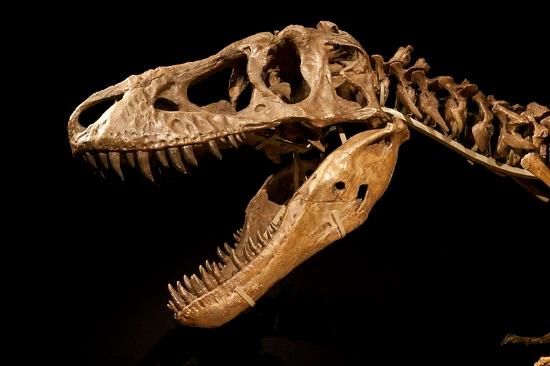
That doesn’t mean the Tarbosaurus is safe. Even if the dinosaur was illegally collected, it may have been legally imported to the United States and still eligible for sale. The mostly complete tyrannosaur could still disappear into someone’s private collection. Even though the dinosaur is part of Mongolia’s prehistoric heritage and should go home to its country of origin, the ultimate fate of this Tarbosaurus has yet to be determined. I haven’t heard any updates about a Tarbosaurus leg that was pulled from auction at Christie’s pending a similar investigation into its provenance.
This isn’t just about the legality of selling dinosaurs. It’s about what happens to a country’s natural history. Too often, significant specimens disappear into private collections where they are rendered effectively useless to scientists. This also cheats the public. It’s true that only a fraction of dinosaurs ever collected go up on display, but paleontologists require a large sample of dinosaurs to investigate anatomy, variation, evolution and other biological information preserved in dinosaur skeletons. Those findings filter through to exhibits, books, documentaries and even Hollywood films. Indeed, while members of the public may not get to see every dinosaur up close and personal, public museums keep those remains in the public trust and draw from those specimens to flesh out the world of the dinosaurs. In a private collection, a dinosaur is robbed of its scientific context and becomes just a decorative prop for the affluent. If you’ve got money to burn, buy a skeletal cast—they are cheaper and easier to mount.
Paleontologist Victoria Arbour also contemplated the strange distrust of paleontologists that cropped up in this controversy. On her blog Pseudoplocephalus, she wrote:
The role of museums is to conserve artifacts for the long haul—not just a few years, not just this generation, but theoretically for hundreds and hundreds and hundreds of years. Museums also facilitate scientific research (thus contributing new knowledge to society), and education (passing new and old knowledge to members of society). … Because these are publicly-supported institutions, their role is to conserve cultural and natural history artifacts for the people, and so the whole concept of fossils being locked away from the public in museums is largely incorrect.
Indeed, if museums put everything they had out on public display, visitors would probably complain about all the bone fragments, mammal teeth and pieces of turtle shell. Even if museums pick and choose what they display, the science that comes out of their collections influences the public presentation of paleontology. That’s why I hope the Tarbosaurus is saved for science. Every dinosaur contains stories about its life and evolution in its skeleton, and sending the Tarbosaurus back to Mongolia would be a first step in allowing paleontologists to draw out those prehistoric tales.
Sign up for our free email newsletter and receive the best stories from Smithsonian.com each week.
8 Comments »
RSS feed for comments on this post. TrackBack URI


“Too often, significant specimens disappear into private collections where they are rendered effectively useless to scientists”
Although I agree that objects like this in general should be kept publicly accessible to the general and scientific publics I don’t think it is necessarily true that they are rendered effectively useless to scientists. Art history researchers and art museums seem to manage just fine with a lot of very important works tied up in private collections.
It’s fair to say it makes life a lot more fiddly and there’s always the danger that a private collector will allow preferred access to some people over others but I think the science community needs to get more savvy with objects in private collections.
Private collectors will let who they want view the bones, and a museum only lets who they want view the bones. Is there really a difference.
Suppose a country with rich paleo deposits adopted a policy of not letting scientists examine fossils discovered there, or made it very hard for scientists to do so. Suppose further that the country was governed by creationists belonging to the fundamentalist branch of whichever religion you like least.
Would you support the smuggling of fossils out of that country?
Most reasonable people agree that this Tarbosaurus should be returned to Mongolia, as do I. But I don’t think it’s necessary to adopt the principle that fossils should ALWAYS be returned to their home country. At least not if scientific knowledge is what you are trying to maximize.
If a country with rich paleo deposits was governed by creationists and adopted a policy of not letting scientists examine fossils discovered there… then I STILL would not support the smuggling of fossils out of that country.
There are countries right now that, through legal or bureaucratic means, make it difficult for foreign scientists to study their specimens. I wouldn’t support the theft of those specimens, either.
There are purposes for which the breaking of an unjust law is justified or even imperative. Vertebrate paleontology, as much as I love it, is not one of them.
Mark – paleontology is not the art history world. One of the most serious problems is that of provenance – paintings have a signature somewhere on them, and can often be identified. However, with fossils – unless the collector documented where exactly the fossil was found – not only geographically, but stratigraphically – we just don’t have that great a handle on where its from or its age (part of the problem in the case of the stolen Tarbosaurus). Much of the material in private collections has zero provenance, and due to that, much of it is scientifically worthless. Secondly – in science, we need to be able to have repeatable experiments. If an experiment is not repeatable – it is not testable. We have clear rules in paleontology that we cannot publish upon specimens in private collections, because we don’t know if the fossil is going to get sold five years down the line after publication – maybe it will get sold to someone who won’t let anyone look at it. So, while tempting, we have to ignore these “gray zone” fossils until they end up in a museum, although tempting they may be.
Isaac – you’re right. There are some museums like that, but they are the minority. It’s a problem in places like China, but it’s generally a very rare problem, and one that most researchers don’t really run into.
Mark Carnall – Attempting to compare fossils to art in terms of research is quite absurd. A work of art in a private collection has most likely been examined and photographed at some point. Other works by the same artist may be publicly available. That dinosaur, as with many other fossils that end up in private collections, has probably never been utilized by scientists wishing to examine it and take samples. The potential discoveries that specimen could provide to the scientific community go well beyond simply looking at a picture of it while it sits in a private collection.
As someone involved in Mongolian dinosaur scientific exploration and publication for 25 years, (as well as creator of the Genghis Khan exhibition now next to T. rex at the Field Museum in Chicago with the help of Smithsonian scientists), I am convinced this dinosaur was smuggled from Mongolia.
In Ulaanbataar I was
once offered the best preserved leg of a Tarbosaur ever found, by a
guy who had it in a blanket in his back seat. He’d seen me in the
museum and followed me to my hotel. Asking price $20!0 I reported it to
museum but I don’t think he was caught.
I actually had something to do with figuring out who the seller was and convincing him not to go through with the auction. I gave the information to Robert Painter,the Houston lawyer for President of Mongolia.
Now I’m donating 10 million tugregs to start a Dinosaur Protection Fund to prevent more thievary by providing guards at big past dig
sites like Flaming Cliffs, and funding an investigator. All the best,
Don Lessem
To clarify, I meant to mention it, I am absolutely not in support of this auction but I feel that equating private collections with specimens disappearing into the ether isn’t fair.
Boesse- ‘Much of the material in private collections has zero provenance, and due to that, much of it is scientifically worthless.’
The same can be said of a lot of museum material and those boxes in the corner of your office you mean to get around to documenting too and let us not forget that many many of the world’s greatest palaeontological museums started off as private collections. In fact you could argue that if it wasn’t for private collectors we wouldn’t have the rich record of fossils that we currently study.
Boesse and Bob- I wouldn’t naively brush off the comparison with art history that quickly. A lot of art historical journals are a continuous back and forth between scholars attributing and re-attributing works through meticulous study of the fine details, including even signed works (there was a lot of copying, forgery and paintings from a studio signed by an artist but created by a student). Sound familiar? And I’m not talking about obscure artists either, this is the work of the so called ‘Masters’. Also, there isn’t an abundance of art works. With rare exception every historical major artist that springs to mind has a very limited range of works.
Bob- ‘A work of art in a private collection has most likely been examined and photographed at some point’
Yes, by the international community of art curators who embrace private collectors as part of the wider community of people interested material. Which leads us to ask why hasn’t this happened in palaeontology?