
New Wrinkle in Tarbosaurus Kerfuffle
The man who prepared an illicit tyrannosaur specimen claims that the dinosaur is rightly his
/https://tf-cmsv2-smithsonianmag-media.s3.amazonaws.com/accounts/headshot/RileyBlack.png)
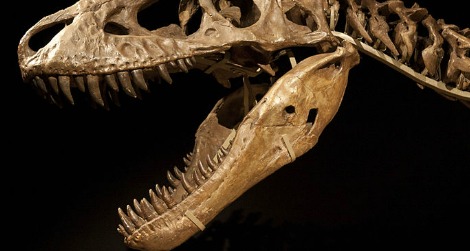

The skull of a mounted Tarbosaurus. Photo by Jordi Payà, from Wikipedia.
The road home for an illicit Tarbosaurus is bound to be a long one. Earlier this summer, federal agents seized a skeleton of the tyrannosaur Tarbosaurus that had been put up for auction in New York City. The sale price for the dinosaur topped $1 million, but, as was long suspected and was soon made clear, the dinosaur was illegally smuggled into the United States. Even worse, the skeleton itself was almost certainly illegally excavated from Mongolia and subsequently smuggled out of the country. Mongolian officials, professional paleontologists, lawyers, and United States officials moved quickly to prevent the dinosaur from disappearing into the collection of the tyrannosaur’s prospective buyer.
I see these events as a victory. The fossil black market has robbed many countries of their natural history heritage, especially Mongolia and China, and I was glad to see so many concerned activists work together in the hope that the Tarbosaurus might be returned. As expert paleontologists have concluded, the Tarbosaurus undoubtedly came from Mongolia–a country with strict heritage laws about who can collect fossils, what can be collected, and what subsequently happens to the fossils. All the evidence accumulated so far supports to idea that the Tarbosaurus was looted from Mongolia. But the man who assembled the controversial Tarbosaurus doesn’t agree, and has filed a claim on the dinosaur. Eric Prokopi, who obtained the Tarbosaurus and stood to profit from the auction, believes that the dinosaur is rightly his.
As reported by Wynne Parry at LiveScience, Prokopi and his attorney are trying to defend the sale of the Tarbosaurus by drawing a distinction between raw fossils and the reconstructed end product. “We are just trying to create a factual distinction between a fossil which is imported and a finished piece which is what was being sold at the auction,” Prokopi’s attorney Michael McCullough said.
But this strategy entirely misses the point. Prokopi obviously put a great deal of time, money, and effort into the tyrannosaur skeleton, but that does not change the fact that the skeleton was almost certainly illegally excavated and, as customs documents demonstrate, smuggled into the United States through a false description. How hard Prokopi worked is absolutely irrelevant. And, frankly, Prokopi should have known better than to put so much effort into a significant dinosaur specimen when he admittedly had no idea where the specimen came from or how it was collected. The bottom line is quite simple–the Tarbosaurus was illegally removed from its home strata, and it should be returned to its country of origin of soon as possible.
/https://tf-cmsv2-smithsonianmag-media.s3.amazonaws.com/accounts/headshot/RileyBlack.png)