Blogs

  • News
  • |
  • Art
  • |
  • History
  • |
  • Food and Travel
  • |
  • Science
Dinosaur Tracking

Where paleontology meets pop culture

Hominid Hunting

Meet the members of the tangled human family tree

Innovations

How human ingenuity is changing the way we live

Surprising Science

Ideas, news and discoveries from the world of science


September 27, 2012

Where’s My Clone-o-saurus?

Seeing a hadrosaur alive would be a fantastic sight. Or any non-avian dinosaur, for that matter. As lovely as today’s avian dinosaurs are, it’s their distant, extinct cousins that fire my imagination. Sadly, despite the speculations of theoretical physicist Michio Kaku, I don’t think my dinosaur dreams are going to come true.

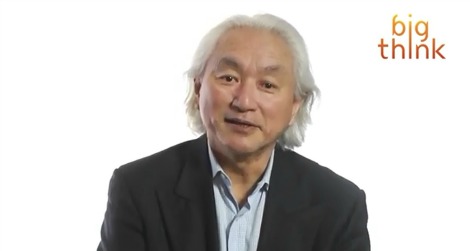
In a Big Think video posted last week, Kaku rhapsodized about the possibility of resurrecting extinct species through genetic techniques. I’m not as optimistic as he is, especially since Kaku glosses over some essential steps in his confused editorial.

Kaku spends most of the video talking about Neanderthals and woolly mammoths. These species went extinct so recently that, in some cases, researchers can extract DNA from their remains and go about reconstructing their genomes. Pretty cool science. Whether I’ll ever be able to cuddle a fuzzy baby woolly mammoth is another matter. (I’ve heard promises ever since I was a child. I’m still waiting.) But non-avian dinosaurs obviously present a different problem. They went extinct about 66 million years ago, and, given the circumstances required for genetic preservation, there’s no hope of ever obtaining Mesozoic dinosaur DNA.

But, Kaku says, “we have soft tissue from the dinosaurs.” He makes it sound as if dinosaur skeletons are saturated with bits of prehistoric flesh. “If you take a hadrosaur and crack open the thigh bones, bingo,” he says, “You find soft tissue right there in the bone marrow.”

Kaku’s going far afield from what science has actually revealed. Since 2007, paleontologists and molecular biologists have been tussling over the possibility that some non-avian dinosaur fossils might preserved the degraded remnants of soft tissue structures such as blood vessels. A Tyrannosaurus femur kicked off the debate, which has since extended to the hadrosaur Brachylophosaurus, as well.

Even though researchers Mary Schweitzer, John Asara and colleagues have hypothesized that they’ve detected preserved proteins from remnants of dinosaur soft tissues, their results have been heavily criticized. The supposed dinosaur leftovers may be microfossils created by bacterial biofilms that broke down the creature’s bodies, and the protein analysis–which placed the supposed T. rex protein close to bird protein–might have suffered from contamination. As yet, there’s no definitive proof that non-avian dinosaur soft tissues or proteins have actually been recovered, and the debate is set to go on for years to come. Contrary to what Kaku says, you can’t simply break open a dinosaur skeleton and start scooping out marrow.

Not that preserved protein would bring us closer to resurrecting Tyrannosaurus or Brachylophosaurus, anyway. The biomolecules could tell us a bit about dinosaur biology, and possibly become another way to test evolutionary relationships, but we’d still lack dinosaur DNA. And even if we could reconstruct a dinosaur’s genome, that doesn’t mean that we could easily clone one. Much like Michael Crichton before him, Kaku skips over an essential and complicated step–the development of the embryo inside the mother. How do you go from a genetic map to a viable embryo? And how can we account for interactions between the embryo and the surrogate mother–a member of a different, living species–that could influence the experimental animal’s development?

Studying the genetics and biomolecular makeup of prehistoric organisms is a fascinating area of research. And even though the dinosaur protein issue remains contentious, the debate has the potential to refine a new way to look at dinosaurs. That’s where the real value of this science is. Non-avian dinosaurs are long gone, and I don’t believe that we’ll ever be able to bring them back to life. But the more we understand about their biology, the better we can reconstruct dinosaurs in our scientific imagination.


***

Sign up for our free email newsletter and receive the best stories from Smithsonian.com each week.

7 Comments »

  1. The part about finding soft tissues inside a tyrannosaurus femur is what creationists use to vehemently defend their 6,000 year myth by making believe that Mary one day broke the bone only to find soft squishy marrow one can reach in and grab with their bare hands all while ignoring the truth about Mary finding none of such a thing inside the bone.

  2. Zach Miller says:

    I think it would be easier (more practical?) to reverse-engineer dinosaurs from modern basal birds. You’d never get back to a Velociraptor, but you might able to to create a very non-avian-looking avian. I’m more optimistic about mammoths and Neanderthals, although it’s certainly not clear, like you say, how we’d actually get to that next step. There are also some ethical questions regarding bringing extinct organisms into the modern world.

    Mammoths are one thing (plenty of tundra left) but Neanderthals are another.

  3. Hikaru Amano says:

    I think the findings of Schweitzer and Asara’s team has been corroborated by other scientists working on dinosaur molecular biology(I think I have already posted my references in some of my earlier messages in this website but it may help people to recall those journal articles if I post them again). Anyway, molecular paleozoology is what excites me the most in topics concerning dinosaurs. But I think what Kaku proposes here is possible(though extremely hard to do indeed): if one knows the amino acid sequences of the proteins extracted from dinosaur bones(provided-and hopefully-they are complete enough), one could run the central dogma in reverse sequence to find out the possible DNA sequences of the genes that coded for such a product/s (and there lies the enormous difficulty-there are literally millions of possible permutations there due to the degeneracy property-meaning a single amino acid could be coded by different codons. Finding the right combination/s of codons may take a few centuries of non-stop computation using our most advanced super computers-and that is still the best case scenario).

    Lindgren J, Uvdal P, Engdahl A, Lee AH, Alwmark C, et al. (2011) Microspectroscopic Evidence of Cretaceous Bone Proteins. PLoS ONE 6(4): e19445. doi:10.1371/journal.pone.0019445.

    Manning,P.L., Morris,P.M., McMahon,A., Jones,E., et al. (2009). Mineralized soft-tissue structure and chemistry in a mummified hadrosaur from the Hell Creek Formation, North Dakota (USA). Proc. R. Soc. B, 276(1672): 3429-3437.

  4. Bob Enyart says:

    Brian, yes, DNA is far more difficult to sequence than proteins. But as Hikaru has posted, there are many journal papers published before and after that single 2008 biofilms paper, which confirm the existence of endogenous soft tissue from dinosaur layers, all cataloged at dinosaursofttissue.com#research

    Soft tissue has been recovered from hadrosaur, triceratops, T. rex, mosasaur, titanosaur, etc., with the papers appearing in PNAS, Science, Nature, J Vert Pal, etc.

  5. Reed says:

    I seem to remember Michael Crichton saying that when he got to the parts he couldn’t figure out about how to clone a dinosaur (after researching this with lots of experts) he just went ahead and wrote around that (the frog DNA use plays a central role in the book that it does not in the movie). In the movie, Ian Malcolm asks at one point “How do you interrupt the cellular mitosis?” and gets no answer: a nod to Crichton’s note about not having all the answers and how cloning a dinosaur would work.

  6. Bob Enyart says:

    Brian, Hikaru’s papers are worthwhile. Here’s the list I’ve assembled of papers from leading journals which argue that endogenous dinosaur biological material and even original soft “tissue” is confirmed, and by protein sequencing and immunological tests, falsify the 2008 bacterial biofilms interpretation.

    2012 Nature Communication, New evidence on the colour and nature of the isolated Archaeopteryx feather by Carney, et al., a non-Schweitzer group of five authors from Brown University, University of Texas, University of Akron, and from Carl Zeiss in Germany. 3(637) doi:10.1038/ncomms1642 Jan. 24

    2011 – PLoS One: Dinosaur Peptides Suggest Mechanisms of Protein Survival by San Antonio, Schweitzer, [and six other authors including from Orthovita, Inc.; University of Pennsylvania; NCSU; North Carolina Museum of Natural Sciences; Montana State University; the Illinois Institute of Technology; Harvard Medical School; University of Manchester; University of York; and MIT]
    PLoS ONE 6(6): e20381. doi:10.1371/journal.pone.0020381

    2011 – PLoS One: Microspectroscopic evidence of cretaceous bone proteins by Lindgren, et al. [a non-Schweitzer group of twelve authors from Lund University, Sweden; Southern Methodist University; and Midwestern University].
    PLoS ONE 6(4): e19445. doi:10.1371/journal.pone.0019445.

    2010 – PLoS One: Influence of microbial biofilms on the preservation of primary soft tissue in fossil and extant archosaurs by Peterson, et al. [a non-Schweitzer group of three authors from the University of Wisconsin-Oshkosh and Northern Illinois University].
    PLoS One. 2010; 5(10): e13334. 2010 Oct. 12 doi:10.1371/journal.pone.0013334

    2010 – Proceedings of the National Academy of Sciences: Archaeopteryx feathers and bone chemistry fully revealed via synchrotron imaging by Bergmann et al. [a non-Schweitzer group of eight authors from Stanford Nat'l Accelerator Laboratory, the Middle Waters Institute, University of Manchester, University of Pennsylvania, and the Black Hills Institute].
    Proc Natl Acad Sci U S A. 2010 May 18; 107(20): 9060–9065. 2010 May 8. doi: 10.1073/pnas.1001569107 from the cover

    2009 – Science: Biomolecular Characterization and Protein Sequences of the Campanian Hadrosaur B. canadensis by Schweitzer in a group of sixteen authors from North Carolina State, Harvard University, Montana State, Boston’s Beth Israel Deaconess Medical Center, Dana Farbar Cancer Institute, London’s Matrix Science Ltd., Bozeman’s Museum of the Rockies, Harvard-MIT Division of Health Sciences and Technology, and Harvard Medical School.
    Science 1 May 2009: 324 (5927), 626-631 DOI:10.1126/science.1165069

    2009 – Proceedings of the Royal Society B, Manning,P.L., Morris,P.M., McMahon,A., Jones,E., et al. (2009). Mineralized soft-tissue structure and chemistry in a mummified hadrosaur from the Hell Creek Formation, North Dakota (USA).
    Proc. R. Soc. B, 276(1672): 3429-3437.

    2008 Contrary Opinion: 2008 – Public Library of Science – PLoS One: Dinosaurian Soft Tissues Interpreted as Bacterial Biofilms: by Burke Museum of Natural History’s T. Kaye, et al.
    PLoS ONE 3(7): e2808. doi:10.1371/journal.pone.0002808

    2007 – Expert Reviews of Proteomics: Will current technologies enable dinosaur proteomics, by Gary B. Smejkal [then associate professor molecular biology, University of New Hampshire]; Schweitzer.
    December 2007, Vol. 4, No. 6, Pages 695-699 DOI:10.1586/14789450.4.6.695

    2007 – Science: Analyses of soft tissue from Tyrannosaurus rex suggest the presence of protein by Schweitzer [and six other authors from NCSU; MSU; Beth Israel Med. Ctr.; Harvard School of Med.; Univ. of Chicago].
    Science Apr 13;316(5822):277-80.

    2007 – Proceedings of the Royal Society B: Biological Sciences: Soft tissue and cellular preservation in vertebrate skeletal elements from the Cretaceous to the present by Schweitzer, Wittmeyer, Horner.
    Proc Biol Sci. Jan. 22; 274(1607): 183–197. doi:10.1098/rspb.2006.3705

    2007 – Science: Protein sequences from mastodon and Tyrannosaurus rex revealed by mass spectrometry, J. Asara [of Beth Israel Med. Center, Boston and today at Harvard]; Schweitzer, Mary H.
    Science 13 April 2007: Vol. 316 no. 5822 pp. 280-285 DOI: 10.1126/science.1137614

    2005 – Langmuir: A Journal of the American Chemical Society: Preservation of bone collagen from the late Cretaceous period studied by immunological techniques and atomic force microscopy by R. Avci [and five other authors from MSU, NCSU, Argentina Universitad Nacional].
    Langmuir, 2005, 21 (8), pp 3584–3590 DOI: 10.1021/la047682e

  7. What Bob Enyart said.

    It’s very strange that a bacterial biofilm would have the look, structure, and pliability of blood vessels just because it would have grown in the same places.

    Mostly the reaction against dinosaur soft tissue because it came as a huge surprise. That talk should have been silenced once and for all when some of the soft tissue in a female T. rex thigh was found to be medullary tissue, which provides calcium for the eggshells. No way a bacterial biofilm is going to replicate that.

    Please get over it, Brian. We find soft tissue in dinosaur bones from time to time.

RSS feed for comments on this post. TrackBack URI

Leave a comment

Comments are moderated, and will not appear until Smithsonian.com has approved them. Smithsonian reserves the right not to post any comments that are unlawful, threatening, offensive, defamatory, invasive of a person's privacy, inappropriate, confidential or proprietary, political messages, product endorsements, or other content that might otherwise violate any laws or policies.

Spam protection by WP Captcha-Free

Advertisement


Follow Us

Travel with Smithsonian


Advertisement