Blogs

  • News
  • |
  • Art
  • |
  • History
  • |
  • Food and Travel
  • |
  • Science
Food & Think

A heaping helping of food news, science and culture

Off the Road

The travel adventures of a nomad on the cheap


February 7, 2012

Sugar of Lead: A Deadly Sweetener

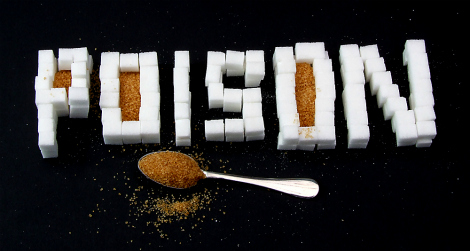
Sugar as poison. Image courtesy of Flickr user chrisjohnbeckett.

A spoonful of sugar may help the medicine go down, but a growing body of research casts the sweet stuff as a bitter pill. While our ancestors had access to sugar only by way of fruits, the purified stuff has become an alarmingly major part of the Western diet. It’s in a great many processed foods—dessert items or otherwise—and people use and abuse sugar to the point that some nations are trying to control it like tobacco or alcohol. (Before passing its “fat tax,” Denmark imposed high tariffs on sugary goods.) Even sugar substitutes are coming under fire: A recent study reported a link between artificial sweeteners and the risk of metabolic disorders and diabetes, and some of you may recall a period when saccharin-sweetened goods were suspect because the substance caused cancer in lab animals. But perhaps one of the strangest sweeteners was lead-based—and as you might expect, its ingestion carried serious consequences.

Lead acetate, also known as sugar of lead, is a salt that (ironically) has a sweet flavor—a fairly unusual quality in poisons, which are more likely to taste bitter, signaling to the taster that they are unsafe for consumption. The ancient Romans used the compound—which they called sapa—to sweeten wine, and the aristocratic segments of the population could toss back as much as two liters a day (about three bottles’ worth, although wine was usually diluted with water). There is debate as to whether the wine alone could have produced the traditional physiological effects of lead poisoning, such as organ failure, infertility and dementia—the little things that help facilitate the fall of an empire.

This is not to say that sugar of lead can’t be lethal. When Pope Clement II died in 1047, no one was exactly sure what killed him, but a 1959 examination of his remains clearly indicated lead poisoning. No one knows for sure if it was accidental or intentional, but one thing was for certain: the man liked his wine, especially those from his native Germany which were sweetened in the ancient Roman manner. And while a number of theories have cropped up concerning Ludwig van Beethoven’s cause of death, ranging from syphilis and coronary disease to lupus, lead poisoning by way of wine has also been suggested as a contributing factor to his demise.

All that said, sugar of lead is probably best left to its modern application: hair coloring products, which, incidentally bear warning labels that this substance is contained therein.


***

Sign up for our free email newsletter and receive the best stories from Smithsonian.com each week.

12 Comments »

  1. So interesting and amazing facts about sugar is discussed. Even lead poisoning can kill anyone , So many amazing facts are shared about suger and salt that are still unknown to anyone.

  2. Jean says:

    This is not new info ….. it’s been known for years. Think what this article is getting at … it is trying to help the industries that are making fake sweeteners. If you want some sugar … eat an apple, orange or a banana. Or figure out how to add them to your cooking/baking recipes. There’s honey too you know !!!! Let’s see if Smithsonian approves of this post and will they show it in the comments section. If they do thumbs up !!!!

  3. So true!

    I’m happy that so many people are now realizing how awful sugar is for your body.

    Sugar, except in fruits, is totally man-made and processed. Our bodies don’t need it and don’t like it. Spikes in insulin levels are now a major concern worldwide and are causing horrible diseases.

    Nice article. Let’s definitely get the word out on sugar. Follow this rule; if it’s sweet, don’t put it in your mouth!

  4. Tim says:

    Taylor:

    1. The article’s thesis is not that sugar is bad for you. The thesis is that LEAD is bad for you.

    2 You say, “Sugar, except in fruits, is totally man-made.” Oh? So humans make sugar cane? We actually create the beets from which we get beet sugar? We create honey from scratch? I always thought bees made honey.

    3. The US life expectancy in 1900 (subtracting infant mortality) was around 55. Today it’s around 80 and we eat TONS more sugar than in those days. The quality of our lives is drastically better than in 1900. And we keep most of our teeth, unlike people in 1900. So tell me, how is sugar destroying us if we’re living to age 80?

  5. t.chambers says:

    Not all of us live to be 80 – not by a long sight – sugar damage? Look at the thousands of morbidly obese kids – look at the increases in diabetes – look at the blindness, loss of limbs, and other physical problems from diabetes which is often due to the increase in sugar consumption. If extraordinary medical techniques can save sugar addicts who would have died in earlier times, is that a declaration of innocence on the part of sugar? Not hardly.

  6. Pam says:

    The human tongue have distinct flavor receptors. Salty and sweet are two of them. It is natural to crave foods with both salty and sweet ingredients. The key is balance. If we are eating healthy portions of protein/vegetables/grains why not have a little dessert to complete our culinary experience-minus the lead of course.

  7. AnnMarie says:

    Sugar is a refined natural product. When we refine foods, we usually impair their nutritional value. We DO need sugar for optimal brain function, but our bodies can convert starch and protein to sugar, so we really don’t need to eat sugar.
    Our current life expectancy increase is largely due to better food preservation and antibiotics. Our current state of overweight/obesity will bring the expected average age at death down. Hypertension, diabetes are directly related to obesity. Breathing problems and osteoarthritis are worsened by obesity. We’ll be more miserable, too, if we don’t slim down and eat smarter.

  8. Ronald Wilder says:

    Sugar isn’t all man made, sweeters often are man mde and
    some times dangerous. However, too much (Sugar) isn’t good.
    One donut a day will not hurt but a dozen not good. The people today get better health care than long ago. Those
    that live long take better care of themselves, less stress,
    have less risks and few major health issues then the rest.
    Back in the old days before WWII, were often killed by the
    very hospital they went to to be saved. Bacteria, the medical group at those Hospitals didn’t wash their hands nor wear cloves, and the hospitals were not clean for the most part. Part of what is told is true in this report.
    Sugar most eat is processed sugar. I’ve used brown sugar
    to cure Hic Cups. Use honey to sweeten things I eat. Thank,
    the bees for it. Tim, I live to 80 at least, I’m 76, now.
    This acticle, I find interesting, lead can kill a person.
    We find it in so many things commonly used, lipstick, hair
    dye, just to name 2. Maybe that’s what got to the Romans,
    lead poison.

  9. Julieann Wozniak says:

    Romans also used lead and arsenic as cosmetic items. Better living through alchemy!

  10. Jim Rushton says:

    Sugar of lead is probably not a danger to most of us. However, sugar itself, whether it be sucrose or fructose, is a kind of “poison” because it can be addictive. When we eat sugar, our brain releases endorphines (or somethink like them) that make us feel good. However, the next time we eat it, it takes more sugar to get the “feel good” feeling. Thus, we tend to eat more and more sugar. Could that be why our nation is beset with obesity?

  11. GogogoStopSTOP says:

    The first paragraph is a total deception, ‘a la’ climate change. There is not one peer reviewed study or studies that can link sugar to anything but delivering many qualities in a small package. The people who say the things the author says are lying, cheating, egotists who hope to change the world with their fax machine.

  12. GogogoStopSTOP says:

    And I failed to mention, the overwhelming marjority of people who become obese do so because they are “soothed” by the physical, emotional & mental act of eating. Overeating didn’t just get ‘invented.’ Humans have often overeaten for many many reasons, but FORTUNATELY, today it’s so easy to overeat & become obese because we have been so successful at dramatically improving the availability of food & it’s ease of distribution.

RSS feed for comments on this post. TrackBack URI

Leave a comment

Comments are moderated, and will not appear until Smithsonian.com has approved them. Smithsonian reserves the right not to post any comments that are unlawful, threatening, offensive, defamatory, invasive of a person's privacy, inappropriate, confidential or proprietary, political messages, product endorsements, or other content that might otherwise violate any laws or policies.

Spam protection by WP Captcha-Free

Advertisement


Follow Us

Travel with Smithsonian


Advertisement