
Why Peanut Butter is the Perfect Home for Salmonella
A food safety expert explains the scientific reasons why salmonella outbreaks in peanut butter—like the one earlier this week—are so common
/https://tf-cmsv2-smithsonianmag-media.s3.amazonaws.com/accounts/headshot/561436_10152738164035607_251004960_n.jpg)
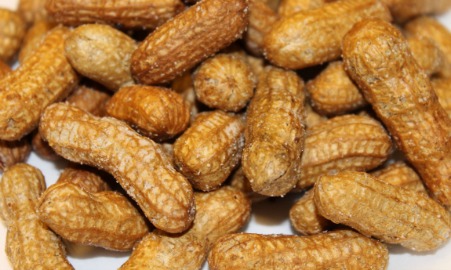

Photo courtesy of Wikimedia Commons.
It’s not peanut butter jelly time. In fact, put down the peanut butter and walk away slowly. If the spread you are putting on your morning toast is from a jar of Organic Trader Joe’s Creamy Salted Valencia peanut butter, you may just want to stick with jelly. The reason? The Food and Drug Administration issued a summons to shut down the country’s largest organic peanut butter processor earlier this week, per the Associated Press.
Salmonella in peanut butter is no new discovery—in 2007, contaminated Peter Pan products resulted in 329 reported cases in 41 states—and this past September, Trader Joe’s voluntarily recalled its Creamy Salted Valencia Peanut Butter due to contamination with salmonella thought to be from Sunland, Inc., located in Portales, New Mexico. The outbreak of salmonella poisoning—41 people infected in 20 states—has since been traced to the New Mexico plant, which distributes to major food retailers including Trader Joe’s, Whole Foods and Target. FDA inspections found samples of salmonella in 28 places in the plant—unclean equipment and uncovered trailers of peanuts outside of the factory, too. Not to worry, though, Sunland Inc. hasn’t manufactured peanut butter since the initial voluntary recall in September.
But how does salmonella get into peanut butter in the first place? Dr. Mike Doyle, who has assisted in helping Sunland getting their plants back up and running again and serves as director of the Center for Food Safety at the University of Georgia, explains that peanuts grow in the ground and can be contaminated from a variety of sources: manure, water, wild animals—even the soil. Studies have shown that once present, salmonella can survive for many months—even years—in peanut butter, according to Scientific American. Before treatment, in fact, about two percent of all peanuts are contaminated with salmonella.
“When harvested, we assume there can be some salmonella present and we have to use a treatment to kill it,” Doyle says. A roaster with air temperatures set to about 300 degrees Fahrenheit destroys salmonella in peanuts. For this reason, this moment in the process is often referred to as the “kill step” by manufacturers. The biggest challenge, then, is to prevent contamination in processing plant after the roasting.
“Water is one of the biggest problems in dry food processing for salmonella proliferation,” Doyle says. “If water is available to salmonella, it will grow.”
Dry food manufacturers like a peanut plants or breakfast cereal producers, for example, must minimize the use of water in the plant. Everything from leaks in the roof to the water used to clean up a mess needs to be controlled.
So what can be done to prevent future contamination? There are a variety of things that can be done to upgrade systems and facilities, Doyle says. But all food processors are different in how they control harmful microbes in their plants. As for the Sunland plant, Doyle says they’ve traced the root cause of the contamination to the roaster room.
“The company is in the process of making changes to prevent future contamination,” he says. “They’re gutting the room—new walls, new floors—and fixing other things that need to be addressed.”
/https://tf-cmsv2-smithsonianmag-media.s3.amazonaws.com/accounts/headshot/561436_10152738164035607_251004960_n.jpg)