
The Origin of the Tale that Gavrilo Princip Was Eating a Sandwich When He Assassinated Franz Ferdinand
Was it really a lunch-hour coincidence that led to the death of the Archduke in Sarajevo in 1914—and, by extension, World War I?
/https://tf-cmsv2-smithsonianmag-media.s3.amazonaws.com/accounts/headshot/mike-dash-240.jpg)
/https://tf-cmsv2-smithsonianmag-media.s3.amazonaws.com/filer/ed/39/ed39d104-9b44-40e5-ae5d-2ca21ef8cb7e/42-54735211_copy.jpg)
/https://tf-cmsv2-smithsonianmag-media.s3.amazonaws.com/filer/44/9d/449d035f-f66e-4962-aadc-dec34beaa130/be064368.jpg)
/https://tf-cmsv2-smithsonianmag-media.s3.amazonaws.com/filer/68/c7/68c719c8-f5e5-4cab-92a3-4ebbcad9082e/princip-white-border.jpg)
/https://tf-cmsv2-smithsonianmag-media.s3.amazonaws.com/filer/b2/16/b2161b42-10a1-4db3-9639-e05ebbe16db4/u16766inp.jpg)
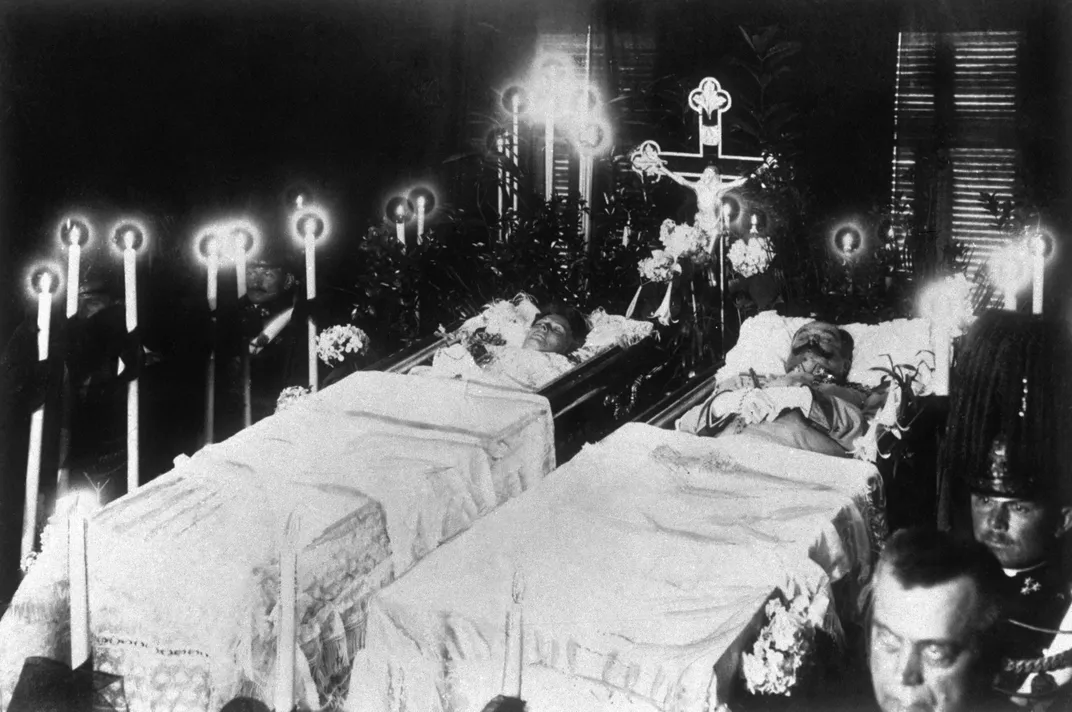
It was the great flash point of the 20th century, an act that set off a chain reaction of calamity: two World Wars, 80 million deaths, the Russian Revolution, the rise of Hitler, the atomic bomb. Yet it might never have happened–we’re now told– had Gavrilo Princip not got hungry for a sandwich.
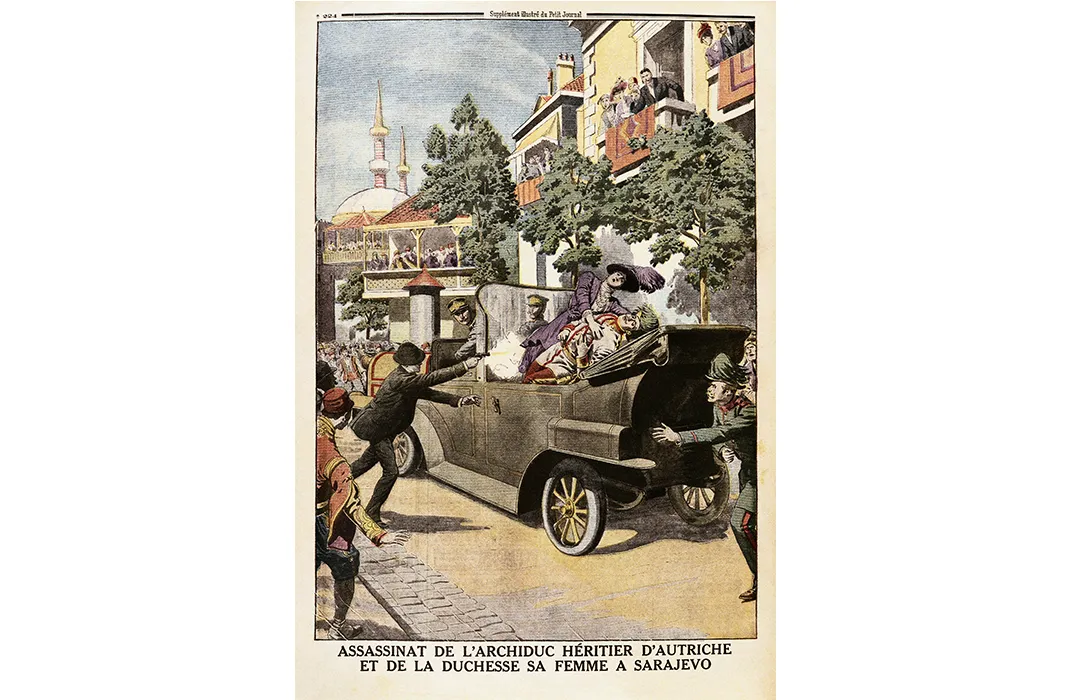
We’re talking the assassination of Archduke Franz Ferdinand, of course—the murder that set the crumbling Austro-Hungarian Empire on a collision course with Serbia, and Europe down the slippery slope that led to the outbreak of the First World War a month after Princip pulled the trigger on June 28, 1914. More specifically, though, we’re talking the version of events that’s being taught in many schools today. It’s an account that, while respectful of the significance of Franz Ferdinand’s death, hooks pupils’ attention by stressing a tiny, awe-inspiring detail: that if Princip had not stopped to eat a sandwich where he did, he would never have been in the right place to spot his target. No sandwich, no shooting. No shooting, no war.
It’s a compelling story, and one that is told in serious books and on multiple websites. For the most part, it goes something like this:
It is the summer of 1914, and Bosnia has just become part of the Austro-Hungarian empire. A handful of young Bosnian-born Serbs decide to strike a blow for the integration of their people into a Greater Serbia by assassinating the heir to the Austrian throne. Their opportunity comes when it is announced that Franz Ferdinand will be making a state visit to the provincial capital, Sarajevo.
Armed with bombs and pistols supplied by Serbian military intelligence, seven conspirators position themselves at intervals along the archduke’s route. The first to strike is Nedeljko Cabrinovic, who lobs a hand grenade toward Franz Ferdinand’s open touring car. But the grenade is an old one, with a 10-second fuse. It bounces off the limo and into the road, where it explodes under the next vehicle in the motorcade. Although several officers in that car are hurt, Franz Ferdinand remains uninjured. To avoid capture, Cabrinovic drains a vial of cyanide and throws himself into a nearby river—but his suicide bid fails. The cyanide is past its sell-by date, and the river is just four inches deep.
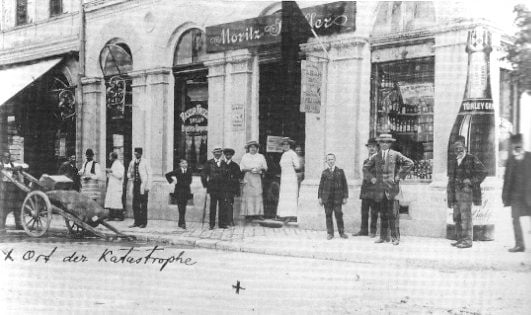
The bombing throws the rest of the day’s plans into disarray. The motorcade is abandoned. Franz Ferdinand is hurried off to the town hall, where he is due to meet with state officials. Disconsolate, the remaining assassins disperse, their chance apparently gone. One of them, Gavrilo Princip, heads for Moritz Schiller’s delicatessen, on Franz Joseph Street. It’s one of Sarajevo’s smartest shopping destinations, just a few yards from the bustling through road known as Appel Quay.
As Princip queues to buy a sandwich, Franz Ferdinand is leaving the town hall. When the heir gets back into his limousine, though, he decides on a change of plan—he’ll call at the hospital to visit the men injured in the grenade blast.
There’s just one problem: the archduke’s chauffeur, a stranger to Sarajevo, gets lost. He swings off Appel Quay and into crowded Franz Joseph Street, then drifts to a stop right in front of Schiller’s.
Princip looks up from his lunch to find his target sitting just a few feet away. He pulls his gun. Two shots ring out, and the first kills Franz Ferdinand’s wife, Sophie. The second hits the heir in the neck, severing his jugular vein.
The archduke slumps back, mortally wounded. His security men hustle Princip away. Inside Schiller’s deli, the most important sandwich in the history of the world lies half-eaten on a table.
As I say, the story of Gavrilo Princip’s sandwich seems to be everywhere today—run an internet search for the phrase and you’ll see what I mean. There’s the teacher who has asked his class, for extra credit, to find out what sort of sandwich the killer ordered. (Consensus answer: cheese.) There’s the linguist’s deconstruction. There’s the art project—famous assassins’ faces paired with their victims’ on opposite sides of a sculpted toastie. And I first heard the tale from my daughter, who came home from school one day bursting to tell me the incredible new fact she’d just been taught in history class.
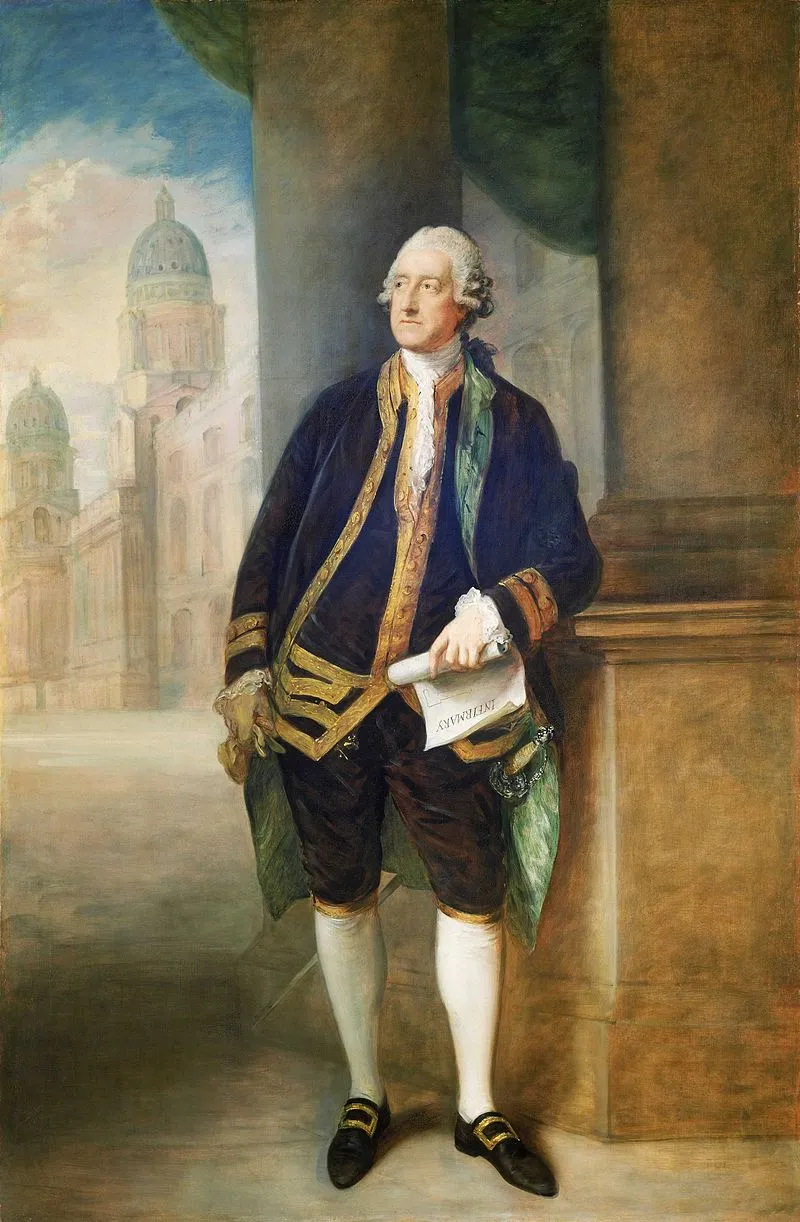
I was astonished by the story, too, though not because of the strangeness of the coincidence. It bothered me, because the details are new (you’ll struggle to find a telling of the tale that dates to before 2003), and because it simply doesn’t ring true. That’s not because the modern version isn’t broadly faithful to the facts; it’s not even utterly implausible that Princip might have stopped off at Schiller’s for a bite to eat. No, the problem is that the story is suspiciously neat–and that the sandwich is a quintessentially Anglo-American convenience food. The dish was named in the 1760s for John Montagu, the 4th Earl of Sandwich, who was in the habit of requesting his meat placed between two slices of toast so he could lunch at his desk. But it took time for the idea to cross the Channel, and I find it hard to believe the sandwich would have featured on a Bosnian menu as early as 1914.
Certainly there is nothing in the main books on the assassination to suggest that Princip was eating anything when Franz Ferdinand appeared. Joachim Remak, writing in 1959, says the assassin waited outside Schiller’s, where he spoke to a friend, but makes no mention of him lunching there. Roberta Strauss Feuerlicht, writing nine years later, makes the separate point that Schiller’s delicatessen stood on the original route planned for Franz Ferdinand’s motorcade; indeed, the chauffeur’s fatal uncertainty was caused by the local governor, Oskar Potiorek, shouting at him from the passenger seat that he had should have stayed on Appel Quay. In other words, Princip was standing in precisely the right place to assassinate the archduke if the Franz Ferdinand had stuck to his plans, and so could hardly be said to be the beneficiary of some outlandish coincidence. And David James Smith, author of One Morning in Sarajevo, June 28 1914 (2008), the most recent book-length study of the assassination, notes that the murder took place at around 10.55 a.m.—rather early for lunch. Not one of these authors mentions Princip eating; none even seems to be aware of the version of the story being taught today.
We can take the investigation further than those printed sources, too, because when I first took an interest in this problem, Gaius Trifkovic—a Bosnian First World War expert and member of the staff at the Axis History Forum—was kind enough to go back to the original transcripts of Princip’s trial for me. These were published in Serbo-Croat by Vojislav Bogicevic in 1954 as Sarajevski atentat: stenogram glavne rasprave protiv Gavrila Principa i drugova, odrzane u Sarajevu 1914. Trifkovic reports that:
Princip merely said he was present in the vicinity of the “Latin bridge” when the car came along (p.60). A certain Mihajlo Pusara who was talking to Princip just moments prior to the assassination also doesn’t mention Princip eating (p. 258); the same with Smail Spahovic, guard who threw himself at Princip before he could fire the third shot (pp.277-8). Especially interesting for us is the affidavit of a certain Milan Drnic, who was at the time standing at Schiller’s door (Schiller offered his wife a seat); he was standing “some 6 paces” from Princip and clearly saw him holding his Browning before emptying it at the archduke and duchess (p. 300). No sandwich here either.
It seems clear, then, that Princip didn’t mention eating a sandwich June 28, 1914, and neither did any witness. Indeed, eating sandwiches is not a local custom in Sarajevo; a Serbian reader of the Axis History Forum chipped in to inform me that “this ‘sandwich’ theory is not plausible—even today, with sandwiches available in every street bakery, few Serbs would go for such option. It’s either burek or pljeskavica.” So where on earth did the idea come from?
My daughter provided the next lead. She had picked up her information from a TV documentary on the assassination made by Lion TV, a British production company, for a series known as “Days that Shook the World.” I tracked down a copy of the program, and, sure enough, in following Princip and Cabrinovic from the hatching of their plot to their deaths in prison of tuberculosis, the script states (at 5:15): “Gavrilo Princip has just eaten a sandwich, and is now standing outside Schiller’s delicatessen … when suddenly the Archduke’s car happens to turn into Franz Joseph Street. Completely by chance, fate has brought the assassin and his target within 10 feet of each other.”
So is “Days That Shook the World” the source of the sandwich story? Probably. The documentary has circulated widely–it has been broadcast repeatedly ever since it was first shown in 2003, not only by the BBC in the U.K., but also by BBC America. It is also available for sale on DVD, which has helped to make it popular in schools. And every telling of the tale I could find in print or online appeared after the original broadcast date.
The writer and director of the “Days That Shook the World” documentary was Richard Bond, an experienced maker of quality historical programs. In an email, he recalled that while the research for the program was “incredibly meticulous” and involved consulting a variety of sources in several languages–”contemporaneous newspaper articles, original documents and out-of-print books containing eyewitness interviews”–he could no longer remember how he sourced the vital bit of information. “It’s possible that ‘sandwich’ was a colloquial translation that appeared in these sources,” he wrote.
As of last week, that’s where the story rested. Let’s note that Bond’s documentary places less stress on Princip’s sandwich than do later retellings, in which the element of coincidence has been stretched, then stretched again. And I can see that my own obsession with getting to the bottom of the story may seem like nitpicking to some. After all, who cares why Princip came to be standing outside Schiller’s deli, when all that matters is that he was in the right place at the right time to pull his gun?
Yet in one vital sense, the problem really is important. Amazing as it may seem, the sandwich story is in danger of becoming the accepted version of events in both the U.S. and the U.K. And by portraying the assassination of Franz Ferdinand as a piece of outrageous coincidence, the story of Gavrilo Princip’s sandwich makes it seem far less important to think deeply about the killer and his companions, and about their motives and determination. Certainly no one who depends solely on the “Days That Shook the World” documentary will come away from it with a deeply nuanced understanding of what Serbian nationalists believed in 1914, or exactly why they thought the assassination of Franz Ferdinand was desirable or justifiable. But that knowledge is precisely what students need to understand the origins of the First World War.
Afterword
Ever since I started working on this story, I’ve been frustrated by my inability to trace it to a source that appeared before “Days That Shook The World” was first broadcast in 2003. Last week, however, I finally unearthed an earlier version. The source, if it is the source, is appropriately farcical, because it is not a work of history but a novel–indeed, not so much a novel as a burlesque. Titled Twelve Fingers, it was written by a Brazilian TV host named Jô Soares; its hero is born to “a Brazilian contortionist mother and a fanatically nationalist Serbian linotypist father” and blessed with an extra finger on each hand. These make him particularly dextrous, and so he trains as an assassin and finds himself sucked, Zelig-style, into many of the most important events of the last century. The book was such a success in the original Portuguese that it was translated into English and published in both the U.S. and the U.K. in 2001—predating the “Days That Shook the World” documentary by enough for the idea to have begun to leach into popular consciousness as the book was reviewed, read and discussed.
On page 31, Dimitri, the hapless hero of Twelve Fingers, encounters his friend Princip near the Appel Quay. Then, for the first time ever, we glimpse the Bosnian assassin in refueling mode:
When he arrives at the corner of the quay, across from Schiller’s market, he bumps into a youth coming out of the market eating a sandwich. He recognizes him immediately. It’s Gavrilo Princip. Feigning surprise, he says, “Gavrilo! It’s been such a long time! What’re you doing here?”
“I’m eating a sandwich.”
“I can tell that. Don’t treat me like a child.”…
They fall silent, while Gavrilo finishes his sandwich and takes a grimy kerchief from his pocket to wipe his hands. When he opens his coat to put away the kerchief, Dimitri sees a Browning pistol tucked into the waistband….
The two go their separate ways, walking in opposite directions. Dimitri Borja Korozec returns to his ambush spot in the alley, waiting for Franz Ferdinand to continue with the rest of his schedule, and Gavrilo Princip goes to meet his destiny.
Sources
‘Gavrilo Princip’s sandwich.’ On Axis History Forum, May 10-July 15, 2010, accessed September 9, 2011; ‘The Assassination of Archduke Ferdinand‘, in “Days That Shook the World,” Series 1, Episode 5, 2003. Lion Television documentary series; Joachim Remak, Sarajevo: the Story of a Political Murder. New York: Criterion Books, 1959; N.A.M. Rodger. The Insatiable Earl: A Life of John Montagu, Fourth Earl of Sandwich, 1718-1792. London: HarperCollins, 1993; John Simpson. Unreliable Sources: How the Twentieth Century was Reported. London: Macmillan, 2010; David James Smith. One Morning in Sarajevo, 28 June 1914. London: Weidenfeld & Nicolson, 2008; Jô Soares. Twelve Fingers. Biography of an Anarchist. New York: Knopf, 2001; Roberta Strauss Feuerlicht, The Desperate Act: The Assassination of Franz Ferdinand at Sarajevo. New York: McGraw Hill, 1968; Stephen Weir. ‘Gavrilo Princip’s deli sandwich.’ In History’s Worst Decisions: An Encyclopedia Idiotica. London: New Holland Publishers, 2006.
/https://tf-cmsv2-smithsonianmag-media.s3.amazonaws.com/accounts/headshot/mike-dash-240.jpg)