
Do We Really Need to Take Vacations to Space?
The possibility of entering a sealed aircraft, buckling up and exiting the atmosphere in the name of leisure is nearing reality
/https://tf-cmsv2-smithsonianmag-media.s3.amazonaws.com/accounts/headshot/Off-Road-alastair-bland-240.jpg)
/https://tf-cmsv2-smithsonianmag-media.s3.amazonaws.com/filer/Space-Off-the-road-470.jpg)
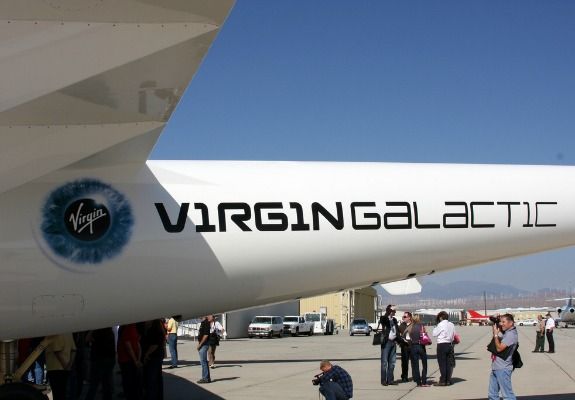
As we approach 2013, the possibility of entering a sealed aircraft, buckling up and exiting the atmosphere in the name of leisure is no longer science fiction. Rather, space tourism is so close to reality that talks of orbital hotels and space property rights are underway, a space runway has been built, a touristic spacecraft from Virgin Galactic is ready, and hundreds of wealthy travelers have prepaid for their seats at $200,000 a head. While the starting price of a space ticket is for now only an option for the extremely rich, analysts say that streamlining of costs and energy outputs, and bringing large numbers of tourists into orbit at once, will eventually make orbital holidays relatively affordable and, possibly, an option for the masses.
In many ways, space travel closely resembles prior phases of human exploration. Five centuries ago, government-funded vessels from Spain traveled across the Atlantic to the New World. Later, common citizens began to make the same trip, and the trans-Atlantic voyage would become a rather routine errand, for better or for worse. Powerful new nations were consequently born. In 1803, Lewis and Clark, working for the U.S. government, embarked on a scientific and cultural exploration of western North America. Their effort opened the West to millions of settlers—for better or for worse. Now, government space exploration has been a reality for more than 50 years—and it may be inevitable that the general public will follow. Proponents of space travel believe that bringing masses of paying passengers into space—and carrying them in reusable launch vehicles—will make space travel cheap enough to become a feasible everyday activity. This will facilitate research endeavors, and space explorers will likely make great discoveries as they move outward into this next, if not final, frontier. Space travel advocates believe that valuable resources—especially minerals, like gold and platinum, and solar power—could be accessed through missions into the wider reaches of our solar system. Further into an imagined future is the prospect of establishing permanent colonies for human habitation far away from Earth.
But as the industry gears up to go, critics are asking why we must tap into other worlds’ resource banks, why we must endanger the lives of astronauts, and why we should spend money on science-fiction-like undertakings while poverty, pollution, inequality, starvation and extinctions are rampant on Earth. A major concern addresses the pollutants that a space tourism industry could introduce to the Earth’s already strained atmosphere. In October 2010, Scientific American‘s John Matson wrote an article titled “What will space tourism mean for climate change?” He wrote that a mature space tourism industry, consisting of 1,000 flights per year, would spew about 600 metric tons of soot into the atmosphere each year—in addition to greenhouse gases produced during takeoff. Over a period of decades, this soot, seemingly negligible on an annual basis, would produce “a persistent and asymmetric cloud over the Northern Hemisphere that could impact atmospheric circulation and regional temperatures far more than the greenhouse gases released into the stratosphere by those same flights.”
Proponents of space travel are ready with their defense. In a 2009 report produced by Space Future, a company committed to “opening space to the public,” there are virtually no reasons for concern about realizing space travel. The authors, Patrick Collins (owner of Space Future) and Adriano Autino (founder of another space travel promoter Space Renaissance International), acknowledged that space tourism would incur small environmental costs to our planet mainly in its beginning stages. As efficiency increased, however, space travel would begin acting almost as a panacea for all of our planet’s ills. They write that in light of current and increasingly frequent “resource wars” between nations, “…opening access to the unlimited resources of near-Earth space could clearly facilitate world peace and security.” They also believe that space travel will generate valuable educational, cultural and emotional benefits.
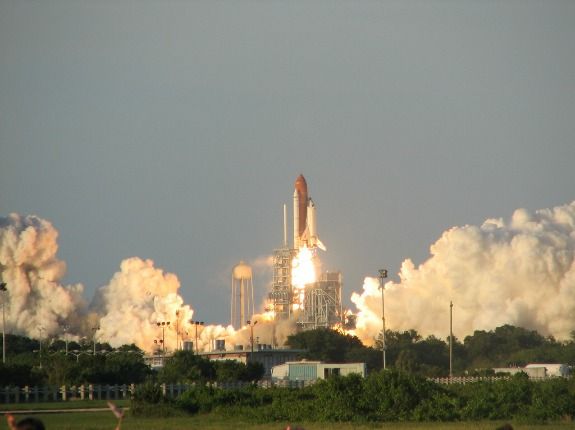
Space Renaissance International has published a “manifesto” outlining the arguments for why we should travel beyond the gravity and atmosphere of Earth. The document begins, “If we, the seven billion people that make up 21st century humanity, want our civilisation to keep growing and improving, we must…”
But why must our species continue to advance? Do we really want to keep growing? I believe that the physical limitations and boundaries of our planet, if not insurmountable by our technology, might be worth respecting. I also believe we should employ our brilliance as a species in figuring out how to live sustainably on this planet, and I would argue that it’s not our business to plunder the natural resources of any other worlds unless we can at least learn to manage and preserve our own—a challenge at which we are failing. But Space Future, Space Renaissance International and other advocates of space tourism believe that we should now be tapping the energy and mineral resources of space precisely because we have failed to properly use and preserve our own. Deep space exploration may be inevitable, as it seems that the human will to conquer or discover eventually overpowers all obstacles and mysteries.
As long as the choice is mine, I’ll remain on Earth. But market research surveys have indicated that many people in certain countries—especially, it seems, Japan—would enjoy a vacation spent in space. Would you?
If you’re bent on going, reserve your spot. Just be sure you’ve got a window seat—and that it isn’t over the wing.
/https://tf-cmsv2-smithsonianmag-media.s3.amazonaws.com/accounts/headshot/Off-Road-alastair-bland-240.jpg)