
The Anti-Skyscraper Law That Shaped Sydney, Australia
What happens when public safety clashes with modern architecture?
/https://tf-cmsv2-smithsonianmag-media.s3.amazonaws.com/accounts/headshot/matt-novak-240.jpg)
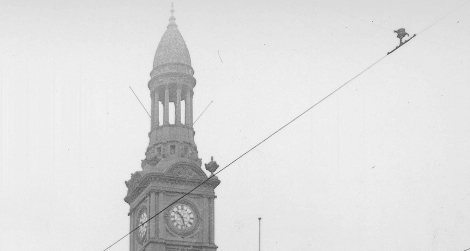
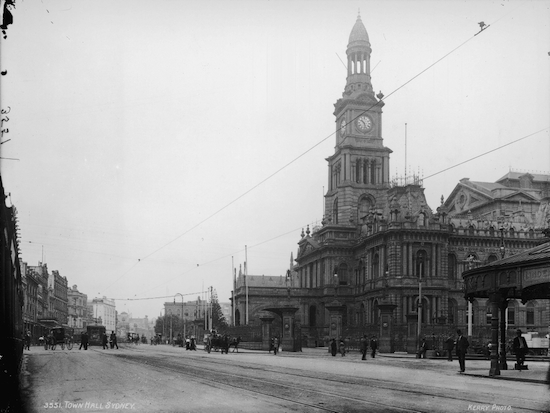
Sydney Town Hall circa 1900 (Powerhouse Museum/Flickr)
When we look at visions of the future from the 20th century we often imagine the lone inventor or solitary artist concocting the fantastical world of tomorrow in isolation. But it’s amazing how frequently both government regulation and the lack of regulation can influence the future of a given city in ways we don’t often think about.
While researching a column I wrote recently for BBC Future about fighting the skyscraper fires of tomorrow I came across a fascinating anti-skyscraper law from 1912 that would have a lasting impact on Australia’s largest city. Fearing that fighting fires was nearly impossible in tall buildings, Sydney passed the Height of Buildings Act of 1912, limiting new buildings to just 150 feet tall. As a result Sydney spent almost half a century growing predominantly outward rather than skyward.
A July, 1901 fire in an 8-story department store building had left five people dead–prompting concern among the residents of Sydney, where modern architecture was quickly sprouting toward the heavens. Firefighters were helpless to reach a young man who clung desperately out of a window in the building 120 feet up. Sadly, firefighters could do nothing to help save the poor man who was well out of reach from their tallest 80 foot ladders. He jumped to his death in front of a lunchtime crowd of horrified onlookers.
Sydney’s skyscraper debate would rage for a decade, coming to a head in 1911 when a record 6,503 new private buildings (many of them taller than ever before) were built in Sydney. The city’s tallest building was completed the very next year in 1912. That building was called the Culwulla Chambers and rose to just 14 stories (165 feet). But it sparked a serious debate about the future of the city and the safety of its inhabitants. How could the people of Sydney be kept safe when skyscrapers inevitably faces the threat of fire and no one had the technical capacity to put it out?
As Alex Roberts and Pat O’Malley note in their 2011 research paper, “Skyscrapers, Fire and the City: Building Regulation in Late 19th and Early 20th Century Sydney,” politicians in 1912 were concerned as much with safety and international reputation as they were with aesthetics when they passed the Height of Buildings Act in 1912. Aside from limiting the construction of new buildings to just 150 feet tall, the Act also states that any building built above 100 feet must show that “adequate provision has been made in respect of such building for protection against fire.” The Act wasn’t amended until 1957.
Today, Sydney is a beautiful modern city with a stunning skyline. But one wonders what the city would look like had vertical growth continued unabated, or the 1912 law had remained in effect after 1957.

/https://tf-cmsv2-smithsonianmag-media.s3.amazonaws.com/accounts/headshot/matt-novak-240.jpg)