
Grandpa Jetson is Way Cooler Than Grandpa Simpson
Montague Jetson is 110 years old—and loving it
/https://tf-cmsv2-smithsonianmag-media.s3.amazonaws.com/accounts/headshot/matt-novak-240.jpg)
/https://tf-cmsv2-smithsonianmag-media.s3.amazonaws.com/filer/b5/76/b576f136-1fa3-4418-86a6-ef0c10d615db/jetsons-elroy-spaceball.jpeg)
This is the eleventh in a 24-part series looking at every episode of “The Jetsons” TV show from the original 1962-63 season.
The 11th episode of The Jetsons opens with a police officer pulling over Montague Jetson — George’s grandfather and a man whose abundant energy and enthusiasm for life dominate the episode. The cop observes that Grandpa Jetson is, “110… and still acting like a man of 75.” With that, we learn that the promises of the 20th century were true: not only will people of the future live longer, they’ll be much happier and healthier. Titled, “A Visit From Grandpa,” the episode first aired on December 2, 1962 and looked at everything from future fashions (when Judy and Jane come home with an assortment of new hats) to sports of the future (when Grandpa Jetson plays with and bests every member of the Jetson family at their favorite sport).

Fashion
In “The Jetsons” everything naturally has a Space Age twist — even the fashion. When Judy and Jane come home from shopping they model their new hats for George which include names like “Moonscape,” the “Cosmonautris” and the “Nuclear Look.” All of these looks appeal to the googie-tastic flare that we’ve come to associate with mid-century futurism and more often than not, what people of the 21st century call the “Jetsons look.” But these far out styles have roots that extend beyond the 1939 New York World’s Fair. The dress at right was featured in the February 1, 1939 issue of Vogue magazine and was designed by Henry Dreyfuss for the woman of the year 2000.
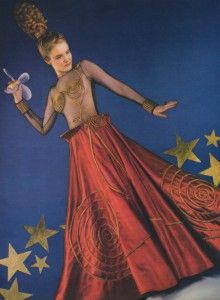
Retailers of the 1930s would sometimes put on futuristic fashion shows but the trend really took off in the 1950s and 1960s, with designers who were inspired by the techno-utopian ideas of the era. In 1957, Marshall Field’s in Chicago had a two week exposition of American living in the year 2000. The store showcased the futuristic works of 17 apparel and accessory designers, giving customers a peek at the supposed futuristic fashions to come. From the May 15, 1957, issue of the Chicago Daily Tribune:
Most of the designers represented agreed that the fashionable woman of the future will be wired for sound, with sending and receiving equipment built into their costume. Fabrics will be treated to be warm in winter and cool in summer. Some will screen the sun to allow tanning without burning while others, used in bathing suits, will make them unsinkable.
The article went on to explain that fashion of the future would require plenty of pockets for all the high-tech gadgets and meal pills we’d all be using.
A futuristic lounging robe by Dorian, for example is equipped with 40 pockets containing food pills, electrical outlets for instant permanents, and communications systems with robot controls to keep the housewife in touch with the laundry, the nursery, and the kitchen.
And what about the Space Age wedding? We’ve looked at late-1950s predictions for honeymoons on the moon. According to fashion designer Zagri, the wedding itself will take place on Venus:
The chic place for weddings of the future will be the planet Venus, according to Chicago designer Zagri. Her design for a bridal costume is a convertible two-piece ensemble of luxurious gold lame. The voluminous skirt and train comes off to reveal a coverall suitable for a space ship honeymoon. A huge plastic bubble equipped with radar is the bride’s headdress.
Longevity
The rocking chair is a symbol of a slower life — the natural desire to take it easy as one becomes older and less agile. Grandpa’s futuristic rocking chair (or at least the one that George and Elroy are working on for him) is another example of Jetsons technology that doesn’t operate quite as it was intended. Silly jokes like George wobbling around on an out-of-control rocking chair are certainly par for the course during any cartoon, but in the Jetson household they also speak to a kind of conservatism that runs throughout the series. Using sight gags, the show will often argue that messing with symbols of tradition (like the rocking chair) will have unpleasant consequences. And tradition aside, there’s no way Grandpa Jetson needs a rocking chair, since in the future even a man of 110 years old will be as happy and healthy as a person half his age.
Predictions of increased longevity became extremely popular mid-century, but they date back much further. The January 2, 1926 Charleston Gazette included a short article about predictions for a future when humans might live to see 200 years old:
A serious scientist has glad news for all those that want to stick to this world, in spite of its troubles and worries. In the year 2000, says he, the average life will be 100 years, and many will live to be 200 years old.
That will interest birth control advocates, for something in the way of birth control would seem to be necessary in 2000 A.D.
A man and woman 200 years old might easily have thousands of descendants. Providence, however, doesn’t let the trees grow into the heavens.
A quarter of a century later the Associated Press would look at life expectancy and health into the year 2000, with a short piece by the AP’s medical editor in 1950:
Medicine by the year 2000 will have advanced the length of life of women to an expectation of nearly 80 and of men to over 75.
The record will be better if the cause and cure of cancer is discovered. Cancer is a form of growth. It is part of metabolism. Concerning growth, nothing is now known. Metabolism is not such a complete mystery, but is complex. Most of the chronic diseases, except infections caused by germs and viruses, are based on metabolism gone wrong.
Growth, metabolism and cancer studies will make the first break into clearing another mystery, the causes of aging. After that is known it will be possible to control aging so that elderly persons will be healthy to nearly the end of their lives.
Hope is very good for restricting cancer’s attack before 50 more years, but not for eradicating it. For it now appears that cancer is not a single disease, but takes many forms.
The prevention of baldness depends on studies of growth, aging and death more than on any other now known factor.
Public health will improve, especially the knowledge of how air carries infections, like the common cold, from person to person. Before 2000, the air probably will be made as safe from disease-spreading as water and food were during the first half of this century.
Surgery, which has been the fastest-moving side of medical science, will by 2000, be able to repair bodies damaged by disease, by accidents or by heredity so that the “lame and the halt” will nearly disappear. Polio probably will be stopped well before 2000.
Sports
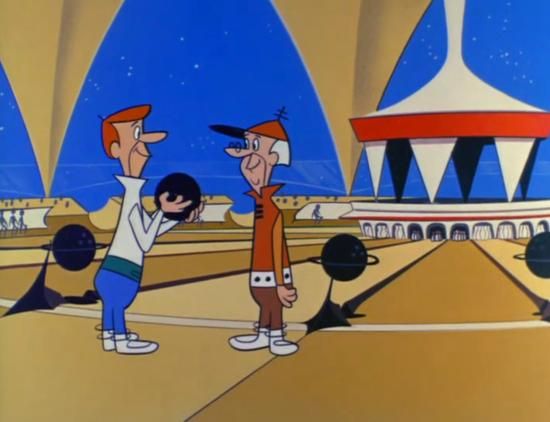
Since the episode revolves around the fact that the elderly will be able to stay active well into old age, we see Grandpa Jetson participate in physical activity with every member of the family. Grandpa shows that he can keep up with Judy’s dance moves, he can both pitch and catch against Elroy in spaceball (which bares a striking resemblance to baseball), he can best George in bowling, he can sky-ski with Jane, and he can play catch with Astro.
The Jetsons, as we’ve seen, most often want to present viewers with something relatable to a mid-century audience. With this in mind we understand why our family of the year 2062 all participate in sports that are familiar to the people of 1962 rather than completely fabricating a new sport. Just add “space” “sky” or “nuclear” to anything and voila: it’s been futured. Or more appropriately from the vantage point of the 21st century: it’s been Jetsoned.
/https://tf-cmsv2-smithsonianmag-media.s3.amazonaws.com/accounts/headshot/matt-novak-240.jpg)