
Viva Las Venus: The Jetsons and Wholesome Hedonism
What happens in the year 2063 stays in the year 2063
/https://tf-cmsv2-smithsonianmag-media.s3.amazonaws.com/accounts/headshot/matt-novak-240.jpg)
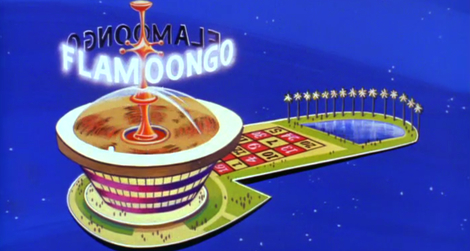

This is the 17th in a 24-part series looking at every episode of “The Jetsons” TV show from the original 1962-63 season.
The January 20, 1963, episode of The Jetsons was titled “Las Venus” and along with the second episode of the series, “A Date With Jet Screamer,” is a great futuristic example of what I’ve come to call “wholesome hedonism.”
What’s this wholesome hedonism that we see continually pop up in the Jetsons universe? Well, it’s sex, drugs and rock and roll. But unlike the more carefree version of these things that would become popularized in American culture during the late 1960s, this was sold as a more socially conservative alternative. The sex was always heterosexual and off-camera; the drugs were strictly all-American cigarettes and olive-filled martinis; and the rock and roll, well that was just mainstream, early ’60s white rock and roll. This version of relaxation — of regular vacations to get away from it all — was expected of middle class Americans of the 1950s and early ’60s, and every kid watching at home was assured that the future would be filled with just as much fun.

The Super Sonic Club in the 17th episode of The Jetsons TV show (1963)
This episode of “The Jetsons” follows the family as they drop off the children on their way to Las Venus, a futuristic stand-in for Las Vegas in the year 2063. George and Jane check into their futuristic hotel room and find robot slot machines, as one might expect in the Vegas hotel of tomorrow. Things are looking like smooth sailing for George and Jane’s second honeymoon until George’s boss calls on the videophone and explains that an executive from General Rotors is in town and that George will have to meet with her. George doesn’t realize it’s a her and, after he does, this apparently poses a problem for a man trying to juggle two commitments.
Today, Las Vegas is known as America’s playground — where there’s a constant push and pull between family-friendly entertainment and anything-goes debauchery. Back when this episode first aired in 1963, Las Vegas was fighting a public relations battle to put a little more “wholesome” in its wholesome hedonistic image.
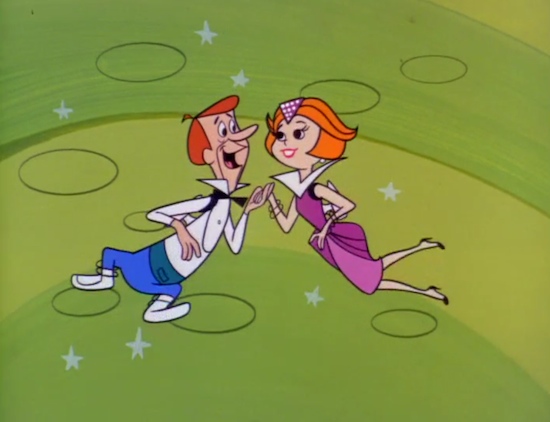
George and Jane Jetson dancing with their jetpacks in “Las Venus” (1963)
In 1930 the population of Las Vegas was just 5,165, but the local economy was supported by the massive spending of the federal government. Construction of the Hoover Dam began in 1931 and that year the city entertained about 125,000 tourists. By 1960 the population had grown to about 65,000 people and about 10 million tourists visited Las Vegas that year and spent about $400 million dollars.
Until 1960, Las Vegas was essentially as discriminatory as the Jim Crow south. Legendary black performers like Sammy Davis Jr. weren’t even allowed to stay in the hotels in which they were performing. After a sold-out show, Sammy had to exit through the kitchen—he was told that white visitors from places like Texas didn’t want to share the gambling floor with non-whites. Even after a sit-down meeting by NAACP members with Las Vegas business owners in 1960 there was still widespread discrimination within the city, though the casinos and hotels were no longer explicitly segregated. (Ed. — For more on Vegas race relations, read our story on the ill-fated Moulin Rouge casino, the first integrated hot spot in town.)
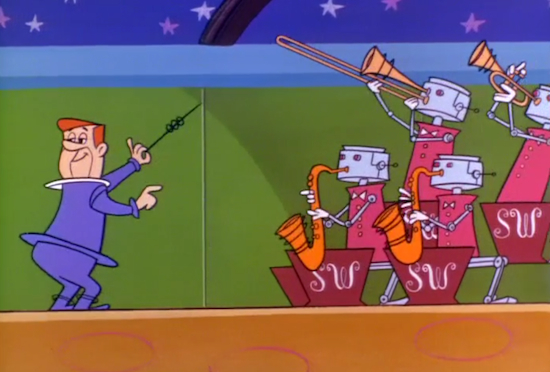
Star-ence Welk-um and his robot band (a parody of Lawrence Welk)
Las Vegas of the early 1960s was defined by a culture of hedonism, excess and organized crime. These saucy ingredients combined with the boom of the postwar era to make Las Vegas the hot new spot for filming TV and movies. But there was quite a push-back by Vegas boosters who worried about the image of the city. Viewers of this Jetsons episode understood Las Vegas largely through the lens of popular culture and the people who were raking in millions from the city’s resorts and casinos understood this all too well.
Ocean’s Eleven (co-starring Sammy Davis, Jr. interestingly enough) was filmed in Vegas and was released in 1960. But two TV shows were set to be produced in Las Vegas in 1961 that never made it past the pilot stage thanks to sabotage by city and police officials. “Las Vegas File” was supposed to be produced by Warner Brothers for ABC and “Las Vegas Beat” starring Peter Graves was supposed to be a detective show that was torpedoed by a write-in campaign to NBC by businessmen who felt that the depictions of crime in the show would reflect poorly on the city. Initially, both shows were assured production cooperation by local police. But after local casino and hotel owners became more acquainted with the content NBC received 11 telegrams complaining about “Las Vegas Beat” and pulled the plug itself even before the Las Vegas Chamber of Commerce could file the lawsuit they had been threatening.
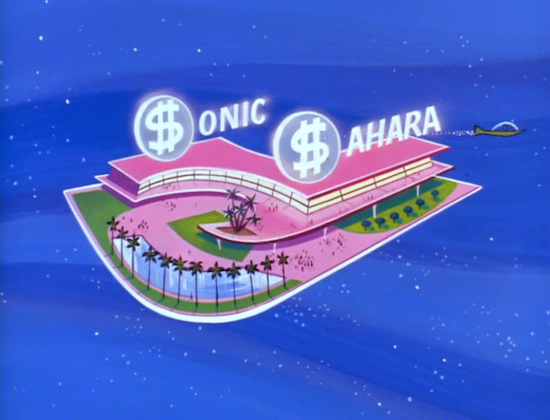
The Sonic Sahara resort hotel in the Jetson’s version of Las Vegas in 2063
Today, the city of Las Vegas continues to struggle with its public image — unsure if it wants to be the place where what happens here stays here or a more wholesome destination of Disney-fied pirates and amusement park rides. But I suppose we have another 50 years of Las Vegas re-inventing itself to discover if a more wholesome hedonism or a traditionally hedonistic version of Las Vegas will arrive in 2063.
/https://tf-cmsv2-smithsonianmag-media.s3.amazonaws.com/accounts/headshot/matt-novak-240.jpg)