
The Christmas Tree Worm, Decorating Coral Reefs Year-Round
The oceans show holiday spirit with a worm on coral reefs that resembles a fluffy fir tree adorned with colored ornaments.
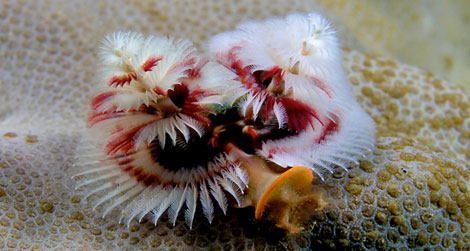
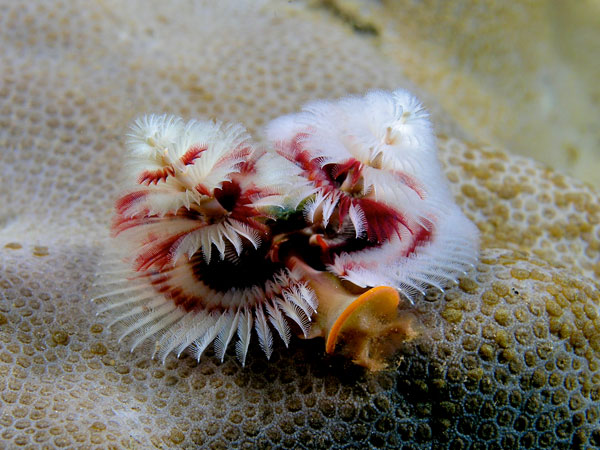
Photo by Nick Hobgood
During the holiday season, even the ocean gets in the spirit! The Christmas tree worm (Spirobranchus giganteus) is a type of polychaete, a group of segmented worms mostly found in the ocean. It lives on tropical coral reefs and resembles a fluffy fir tree adorned with colored ornaments. Each worm has two tree-like appendages that are used to breathe and to catch meals of plankton floating by.
The Christmas tree worms are sedentary, attaching themselves to coral cover that act as their home base. Once attached, they create a calcium carbonate tube that they can then retract into for protection. The fluffy, eye-catching section of the worms that attract divers are small in size, usually not bigger than a few inches, but the remainder of the worm (hiding in its burrow) can be almost twice that size.
Check out more holiday-themed ocean animals and phenomena on the Ocean Portal!
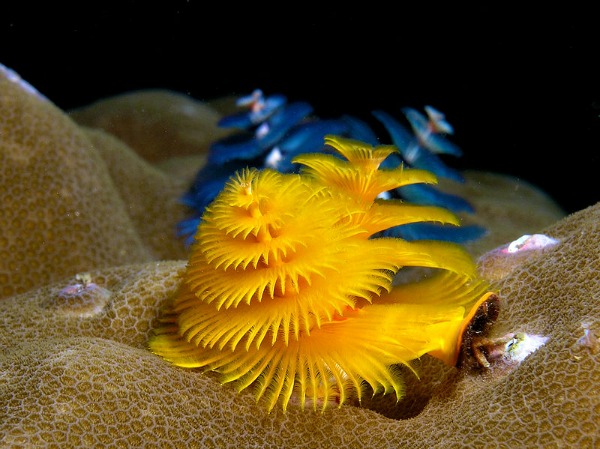
Photo by Nick Hobgood

A colorful “forest” of Christmas tree worms. Photo by Nick Hobgood
Read more articles about the holidays in our Smithsonian Holiday Guide here

Learn more about the ocean from the Smithsonian’s Ocean Portal.