
Pick Your Poison: A Diet Mixer Could Make You Get Drunk Faster
The same amount of liquor causes a higher level of intoxication when mixed with diet soda instead of regular soda, a new study finds
/https://tf-cmsv2-smithsonianmag-media.s3.amazonaws.com/accounts/headshot/joseph-stromberg-240.jpg)

The same amount of liquor causes a higher level of intoxication when mixed with diet soda, compared with regular. Image via Flickr user Joel Olives
If you’re mixing up a cocktail and worried about how drunk you’ll feel after finishing it, you might be closely measuring the amount of liquor that you pour in. But recent research suggests that your choice of mixer—whether regular soda or diet—plays a key role in determining how that alcohol affects your body.
A new study, published by Cecile Marczinski and Amy Stamates of Northern Kentucky University in the journal Alcoholism: Clinical & Experimental Research (ACER), indicates that drinking diet soda with liquor causes breath alcohol concentration (BrAC) to rise more quickly than if the exact same amount of alcohol was mixed with regular soda instead. Among the 16 participants who were tested as part of the experiment, those who’d been given diet soda as a mixer had their BrAC peak at levels 18% higher than those whose drink was mixed with regular soda.
Although there’s been speculation for some time that diet mixers could affect the way alcohol affects the body, very little research has formally tested the idea, and previous studies have merely surveyed people in bars, rather than rigorously testing participants in a lab setting. In this study, 8 men and 8 women who were all occasional drinkers were given a set level of vodka—.03 ounces per pound of body weight—mixed with either Squirt or Diet Squirt. For a 140 pound person, this works out to 4.2 ounces of vodka, the equivalent of three or four mixed drinks.
After drinking, the participants’ BrAC was tested. Those who’d imbibed with regular soda had BrACs that peaked at an average of at .077 grams per 210 liters (BrAC measures the level of alcohol per liter of breath, rather than per a given volume of blood as blood alcohol content does; as represented here, the two measures can be compared more readily). Those who’d drank diet soda, on the other hand, peaked at .091—the difference, in many jurisdictions, between driving legally and a DUI charge.
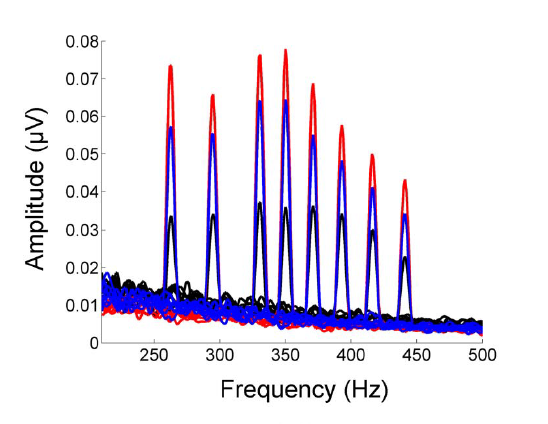
Those who drank diet soda as a mixer had alcohol levels that increased more quickly and peaked at a higher level. Image via ACER, Marczinski and Stamates
The researchers also tested the participants’ reaction times with a computer-based test, and found that the diet soda drinkers’ times were notably slower.
Interestingly, though, each participant was also surveyed on how drunk they perceived themselves to be, and the diet soda drinkers rated themselves just the same as the others. In other words, the drinkers simply judged their level of intoxication based on how many drinks they’d had, even though the contents of the drink affected how the liquor actually affected their bodies.
The scientists feel that this is the most important takeaway of the study. ”The subjects were unaware of this difference, as measured by various subjective ratings including feelings of intoxication, impairment, and willingness to drive,” Marczinski said in a statement. “However, they were above the limit of .08 when they consumed the diet mixer, and below it when they drank the regular mixed beverage. Choices to drink and drive, or engage in any other risky behavior, often depend on how people feel, rather than some objective measurement of impairment.”
The research also prompts an entirely different question—why do diet mixers increase intoxication in the first place? The researchers believe it’s because the body recognizes regular sodas (which include sugar) as food, which slows down the rate of alcohol absorption into the blood. Diet sodas, on the other hand, only include aspartame, which the body doesn’t treat as food, so the alcohol mixed in gets absorbed much more quickly.
/https://tf-cmsv2-smithsonianmag-media.s3.amazonaws.com/accounts/headshot/joseph-stromberg-240.jpg)