Blogs

  • News
  • |
  • Art
  • |
  • History
  • |
  • Food and Travel
  • |
  • Science
Dinosaur Tracking

Where paleontology meets pop culture

Hominid Hunting

Meet the members of the tangled human family tree

Innovations

How human ingenuity is changing the way we live

Surprising Science

Ideas, news and discoveries from the world of science


February 14, 2013

Study Predicts Political Beliefs With 83 Percent Accuracy

Brain scan

MRI

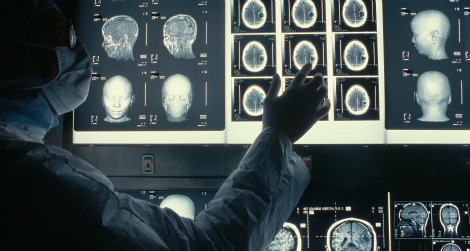
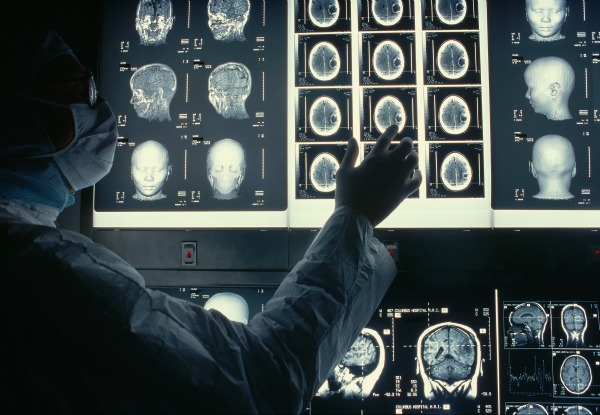
What can brain scans reveal about a person’s political beliefs? Photo by Roger Ressmeyer/CORBIS

If you want to know people’s politics, tradition said to study their parents. In fact, the party affiliation of someone’s parents can predict the child’s political leanings about around 70 percent of the time.

But new research, published yesterday in the journal PLOS ONE, suggests what mom and dad think isn’t the endgame when it comes to shaping a person’s political identity. Ideological differences between partisans may reflect distinct neural processes, and they can predict who’s right and who’s left of center with 82.9 percent accuracy, outperforming the “your parents pick your party” model. It also out-predicts another neural model based on differences in brain structure, which distinguishes liberals from conservatives with 71.6 percent accuracy.

The study matched publicly available party registration records with the names of 82 American participants whose risk-taking behavior during a gambling experiment was monitored by brain scans. The researchers found that liberals and conservatives don’t differ in the risks they do or don’t take, but their brain activity does vary while they’re making decisions.

The idea that the brains of Democrats and Republicans may be hard-wired to their beliefs is not new. Previous research has shown that during MRI scans, areas linked to broad social connectedness, which involves friends and the world at large, light up in Democrats’ brains. Republicans, on the other hand, show more neural activity in parts of the brain associated with tight social connectedness, which focuses on family and country.

Other scans have shown that brain regions associated with risk and uncertainty, such as the fear-processing amygdala, differ in structure in liberals and conservatives. And different architecture means different behavior. Liberals tend to seek out novelty and uncertainty, while conservatives exhibit strong changes in attitude to threatening situations. The former are more willing to accept risk, while the latter tends to have more intense physical reactions to threatening stimuli.

Building on this, the new research shows that Democrats exhibited significantly greater activity in the left insula, a region associated with social and self-awareness, during the task. Republicans, however, showed significantly greater activity in the right amygdala, a region involved in our fight-or flight response system.

“If you went to Vegas, you won’t be able to tell who’s a Democrat or who’s a Republican, but the fact that being a Republican changes how your brain processes risk and gambling is really fascinating,” says lead researcher Darren Schreiber, a University of Exeter professor who’s currently teaching at Central European University in Budapest. “It suggests that politics alters our worldview and alters the way our brains process.”

Politics isn’t the first to cause structural changes in the brain. More than a decade ago, researchers used brain scans to show that London cab drivers’ gray matter grew larger to help them store a mental map of the city. There more time they spent on the road, the bigger their hippocampi, an area associated with navigation, became.

This implies that despite the political leanings seen through our brains, how we vote—and thus the cause of our political affiliations—may not be set in stone, Schreiber says.

“If we believe that we’re hardwired for our political views, then it’s really easy for me to discount in you in a conversation. ‘Oh, you’re just a conservative because you have a red brain,’ or ‘Oh, you’re a liberal because you have a blue brain,’” Schreiber explains. “But that’s just not the case. The brain changes. The brain is dynamic.”


***

Sign up for our free email newsletter and receive the best stories from Smithsonian.com each week.

38 Comments »

  1. Luke Lanciano says:

    You should really capitalize “Democrat” and “Republican”; the party faithful typically demand they be treated with the respect a pronoun connotes. :)

  2. Mohi Kumar says:

    Thanks! Were the terms philosophical or in reference to the party as an entity? We at first couldn’t decide. Now that we’ve reflected a bit, you’re correct. Thanks for the catch!

    Mohi Kumar
    Surprising Science Blog Editor

  3. Steve Ford says:

    Can you foresee any practical use from this sort of data? Great read. Will there be further study with a larger sample? 82 people seems like a small pool. The margin of error has to be in the double digits.

  4. Basho says:

    “‘It suggests that politics alters our worldview and alters the way our brains process.’ Politics isn’t the first to cause structural changes in the brain.”

    Wait a minute, why do political views cause brain changes? Later in the article its reported that we may be “hardwired for our political views”, implying the opposite causality.

    Perhaps describing these associations in less deterministic words would give adequate credit to the complex interplay between experience and biology that determines how our brain forms, changes, and functions.

  5. moderateGuy says:

    Liberals have brains?? The things you learn at Smithsonian.

  6. Keith1970 says:

    I agree with Basho, the correlation does not mean causation and certainly doesn’t show which way it flows. Someone might grow up in an environment that stresses “social connectedness” and therefore more often find themselves more often using “that part of the brain” – so that later in life they just naturally tend to use that part by default. A better experiment, if it could be done, is to test young people who have not yet formed a particular ideology to see whether they fall into these neat brain activity camps, and then later see how they vote as adults.

  7. Chris Ferrell says:

    So where do libertarians figure in this left-right dichotomy? I think the whole thing is quite silly. Leftists (or liberals if you prefer) are more risk averse than conservatives are. They demand that the state protects them fro an infinity of risks that conservatives are content to handle on their own.

    And libertarians would certainly be the ones most willing to accept risk

  8. Evan says:

    Basho, you misread the end of the article. The last two paragraphs specifically say we are -not- hardwired for our political views, but that the brain changes dynamically as a consequence of those views.

  9. James C. says:

    Previous studies have indicated that conservatives have bigger fear centers, while liberals deal with more complexity and socialization. (Google conservative brains and fear.) We see this in reality. Traditional conservatives are quicker to go to war and libertarian conservatives solve any question with a simple “let the market figure it out,” while liberals try to find an actual, non-violent solution, such as complex diplomatic talks, while leaving military action on the table if there’s a clear plan for success and exit.

  10. dave r says:

    Risk comes in flavors, as someone called variation. Is it personal physical risk that is more accepted by liberals, or other kinds? I noted recently some take responsibility well if there are no personal consequences, but maybe that’s just politics.
    That assertion needs detail to be believable.
    Some occupations are relatively risk free as to terminations, like civil service and tenured jobs, but seem loaded with liberals.

  11. Los says:

    The amount of party-based ignorance and arrogance in these comments alone is sad. A few of you should be ashamed to be so stupid and obstinate.

  12. Lemmy Caution says:

    This was a very poorly written article. Material conditions affect political consciousness, which affects the brain structure, not the other way around.

  13. David Ehecatl Carroll says:

    Chris Ferrell, silly would be rejecting empirical research in favor of an irrational opinion based on ideological dogma.

  14. Matt McAlister says:

    I’ve been seeing a lot of interesting research on motivated cognition recently. Political beliefs and values organizing your model of reality, affecting what you accept as fact, and all that. Deep implications.

    But, I also think it’s not surprising that people from these two groups, who differ so markedly in personality, would also differ in patterns of brain activity. Knowing the specific brain regions, though, does give us a more fine grained (and probably novel) understanding of how brains deploy these ideologies.

    What really interests me is the origin of these differences. Are we seeing a genetic predisposition played out over a lifetime? Or are we seeing the effects of a particular enculturation?

  15. That’s a really interesting study. I want to see how far this can be taken, and I’m curious to understand why it’s only 82% accurate…

    I’d be willing to bet that it’s due to how much the party lines have blurred over time, which leaves me to wonder if it would be more effective at predicting someones stance on some large-scale issues.

  16. Gunnergoz says:

    I’d like to see the brain scans of some of the people that posted here. All the trigger cues are there in the article to no doubt light up the scan like fireworks at a firefly convention.

  17. Baculus says:

    Chris, did you even read the article? Liberals tend to be RISK takers more often, which isn’t surprising considering that conservatives tend to be more cautious by nature. Hence, the word “conservative.” Also, all leftists certainly aren’t statists (anarchists, for example), while many conservatives, especially religious ones (after all, God and heaven is the ultimate “state”), seemingly desire an all encompassing structure of some sort, i.e., “law and order.”

    Who tend to explore more in their lifestyle: liberals or conservatives? Just think about it for a moment.

    As far as libertarians are concerned, the root of libertarianism is classical liberalism, and even modern liberals and libertarians agree on 70% of the issues. It’s the economics where there tends to be differences.

  18. Wilson says:

    “Broad social connectedness” is another way of saying lack of identity. “Accept risk” is another way of saying ignorant of cause and effect. In other words, the “liberal” brain is like the unformed brain of a puppy. That has lapped up a pitcher of beer.

  19. Sam Howard says:

    Actually, Liberals ask that the country protect those most in need. It’s not as if the left is home to only the poor, persecuted minorities, and the handicapped. The government only acts through a shared community sacrifice. It’s a statement that nobody is left behind. There is only so far we will let you fall.

    Conservatives scream that this will lead to everyone becoming parasites, because it’s easier to blame those in need than those too big to fail. They’re also terrified of gay marriage. Not risk adverse? They thought Janet Jackson’s nipple was a sign of the end times.

    Anyone who takes them seriously at this point needs to step outside of the echo chamber.

  20. AzureD says:

    @Chris Ferrell
    It is actually conservatives that are risk averse as studies have shown. The securities you profess are a result of societal perceptions resulting in attempts at fairness. Conservatives have a tendency to use social safety nets more often than liberals when available.

  21. Jim Hudson says:

    “Leftists (or liberals if you prefer) are more risk averse than conservatives are. They demand that the state protects them fro an infinity of risks that conservatives are content to handle on their own.”

    That’s of course completely untrue and is addressed specifically in the article.

    As it states “the researchers found that liberals and conservatives don’t differ in the risks they do or don’t take, but their brain activity does vary while they’re making decisions” and “liberals tend to seek out novelty and uncertainty, while conservatives exhibit strong changes in attitude to threatening situations. The former are more willing to accept risk, while the latter tends to have more intense physical reactions to threatening stimuli”.

    This is exactly the opposite of your assertion and clearly reflects your political bias, not reality. I would say conservative aversion to risk and heightened sensitivity causes them to overcompensate and expect even more assurances of “safety” than liberals do, and this can be seen by their demand for both government provided AND personal protections (a strong military and the right to own guns for example). Liberals are much more likely to be opposed to a large military and guns as well, so it is cleary conservatives who are overly risk averse (at least in a physical sense) not liberals.

    Now you could say that liberals want bigger government as it pertains to consumer protection or social justice or the protections of civil liberties but this really has nothing to do with demanding government mitigate “risk” as you define it, it merely means that liberals believe these can’t be accompished by individuals and so must be done by government or these are things conservatives don’t value to begin with, both of which are equally true I believe.

  22. Fred Fnord says:

    Chris Ferrell: Spoken like a true libertarian! Which is to say, one who has never had a political conversation with a liberal, preferring instead to debate them in his own mind. Safer that way, isn’t it?

    The fact is, liberals love risk-taking behavior. Study after study has shown that liberals are more apt to take risks than either conservatives or ‘libertarians’… at least, the United States’s version of libertarians. In fact, liberals want to encourage risk-taking behavior as much as possible, when it can benefit people and society at large (say, opening your own business). That’s why we are in favor of a strong social safety net: because more people will take risks if they know that they won’t die, or live a life of poverty and misery, if they turn out to not be quite good enough, or not quite lucky enough, or whatever. And hey, sometimes the second attempt is much better than the first, because risk-taking is a learning process.

    The conservative (and certainly the libertarian) way is ‘if you have enough money to survive failure, then you can try again!’ Turns out that’s not quite as good at encouraging people who don’t already have a lot of money to take risks. But then, the conservative way is not to care at all about people who don’t already have a lot of money (see? I can abuse stereotypes too!) so I guess it all works out in the end, right?

  23. benjamin5458 says:

    May i suggest combining all three tests all with 68+ percent accuracy by doing a vote between the three. this might give you a better accuracy overall.

  24. too often its still assumed that ‘liberal’ means open minded, and freedom loving just because that’s part of how its defined in the dictionary. these days liberals are known for wanting bigger government; something that entails less freedom.
    Libertarians and Republicans are not the same thing, but it seems like libertarians have a lot more in common with the GOP than the Democrats.
    I didn’t really learn anything new in this article, it seems like a repeat study.

  25. Alex says:

    Sorry, Chris, but your claims are likely mistaken. Previous research has shown conservatives to be more risk averse, and more fearful in general. Liberals don’t want the state to protect them; they simply believe that some social services should be and are best applied by the state. Often these are services that they favor for the poor, children, and others who can’t or are less likely to vote.

  26. You need another model for authoritarian vs anti-authoritarian to pinpoint libertarians, who would be conservative from the standpoint of property relations, and anti-autoritarian. A leftist anti-authoritarian would be an anarchist (like Noam Chomsky, for example). Extremes in authoritarianism would be fascists and Stalinists…

    There are models to locate people thus, but they are just tests, not brain scans.

    This is a US article of course; in many countries “liberal” means centrist or even modernising right-wing and the left is socialist or social-democratic.

  27. 2WarAbnVet says:

    Oh, wow!Here we have another unnecessary but important scientific study that will be debunked by the next important scientific study that will be debunked, etc.

  28. keekee says:

    Where do libertarians fit in? Since they are little more than Republicans it seems likely they are cut from the same fear-based cloth.

  29. Tomchuck says:

    This ‘broad social connectedness’ explains the liberal need to be hip and their compulsion to ‘herd up’ for their various mob activities.

    When we had horses, one of them would sometimes get anxious when removed from the herd to check fences or whatever. It would throw it’s head, stamp it’s feet and call out to the others. It was never dangerous but we didn’t want the animal to be incomfortable. After a minute or two it would be OK.

    We called the condition ‘herd bound’ and regarded it a a negative. Are liberals ‘herd bound’?

  30. John says:

    I agree Chris Ferrell.

    And, speaking of Libertarian-minded people, the Advocates for Self Government have the World’s Smallest Political Quiz which, although made for adults, would probably produce some interesting results if given to children and if those results were later compared to quiz results from the same kids when they become adults. In fact, it might be interesting to give the quiz to kids over a period of time, say every three to four years, to see how their political beliefs change (or not) over time.

  31. Cris says:

    No, Liberals demand that protections are put in place for people that can’t speak up for themselves. Liberals are statistically the same as Conservatives when it comes to taking care of themselves, we just give a damn about the people that don’t have a voice in the political sphere – like immigrants, the poor, etc.

    Don’t forget that the “red” states accept more federal funds compared to what they pay in than the “blue” states do. So, greater numbers of Liberals = more likely to be self sufficient and pay more into the system.

  32. Guillermo Dai says:

    Basho’s right. The experiment, as it’s described here, simply shows a correlation between political party and the way the brain is wired — which is the result of the other isn’t clear at all.

    Perhaps the study included some other research that isn’t mentioned, and the missing parts might explain why lead research Schreiber says politics determines brain wiring?

  33. Valerie says:

    basically says what we already know. Conservatives are self centered wimps who can’t tolerate change.

  34. Edward N. Haas says:

    Because of 2 admitted circumstances, it is quite a stretch to speak of people’s political affiliations as being “hardwired” by their brains. What 2 conditions?! In the first place, if the research predicts with anything less than 100% accuracy, then NOT ALL people’s affiliation is determined by their brain activity, and, if NOT ALL, then “hardwired” is far from true in all cases. In the second place, the research does not indicate which came first: the brain wiring or the party affiliation. In short, this research is little more than a joke.

    EDWARD N. HAAS – HAASWOOD, LA.

  35. Richard Lowe says:

    This is baloney to be polite! How do you explain how the old democrats and republicans reversed philosophies?

    I am the opposite of my parents.

  36. Ian says:

    Next they will have to explain why most conservatives and libertarians act like paranoid schizophrenics.

  37. Scott says:

    This article makes several false assumptions , the first being that all registered Democrats are leftists. Democratic party affiliation is and always has been very diverse when it comes to political philosophy and voting records. This is why a democratic majority in one of the houses of congress does not signify passage of a bill.

    Another false assumption regards causality, as has been discussed above. It is much more likely that “risk-taking” behavior (whatever that means) influences political ideology than vice versa. The fact that areas of the brain may adapt to different circumstances does not support a conclusion regarding causality here.

    These studies demonstrate some limited correlations between brain anatomy, thought processing, and political ideology, but permit none of the conclusions drawn by the author. They do suggest a need for further study. I would be interested in knowing if the aging process affects brain anatomy and thought processing in a way that would explain the fact that political attitudes (but not necessarily party affiliation) tend to become more conservative as we age.

  38. Susie says:

    The view in this comment thread is this: white liberal/SWPL/rich white liberal disdain against *gasp* bad white people/small town people/rednecks/cowboys/evil White Christians and putting/blaming all of the dysfunction of NAMs (Non-Asian minorities) such as Blacks & Hispanics on “bad white people”.

    The fact is that the closer white people live/are exposed to on a daily basis/see Blacks & Hispanics the more racist and gun-toting they are.

    Almost all of the blind bleeding heart liberals are from Vermont, Maine, MA and such. Segregated white liberal places. Who the only black guy they knew was Barack Obama, not his usual son Trayvon Martin.

    The welfare state supports Black/Hispanic gun violence, early teenage pregnancy but also highest rates of abortions, poverty, etc.

    I say send all blacks and Hispanics to white liberals who should practice what they preach. You will love diversity sooner or later instead of segregated white liberal neighborhoods and practicing hipster gentrification.

    Note to white liberals who don’t live or know anything about NAMs: stop hating on white conservatives.

RSS feed for comments on this post. TrackBack URI

Leave a comment

Comments are moderated, and will not appear until Smithsonian.com has approved them. Smithsonian reserves the right not to post any comments that are unlawful, threatening, offensive, defamatory, invasive of a person's privacy, inappropriate, confidential or proprietary, political messages, product endorsements, or other content that might otherwise violate any laws or policies.

Spam protection by WP Captcha-Free

Advertisement


Follow Us


Travel with Smithsonian


Advertisement