
Oil Spill Finally Confirmed as a Culprit in Dolphin Deaths
A new report spells out that the oil spill, along with a couple other coincidental but unfortunate circumstances, initiated the grissly dolphin deaths
/https://tf-cmsv2-smithsonianmag-media.s3.amazonaws.com/accounts/headshot/Rachel-Nuwer-240.jpg)
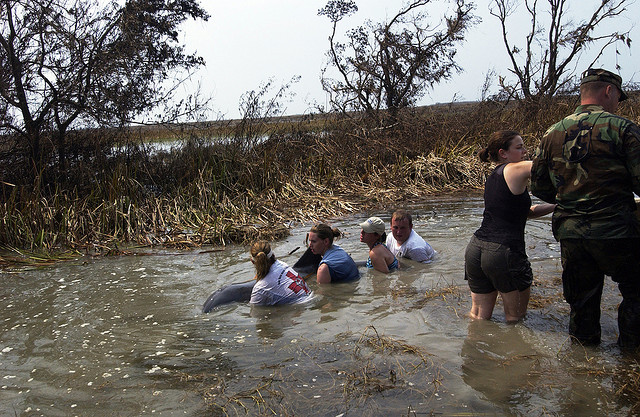
Volunteers rescue a stranded dolphin in Louisiana. Photo: Marion Doss
For more than two years, Gulf Coast residents have risked running into a gruesome scene during beach strolls. Hundreds of dead dolphins—many of them aborted fetuses—have washed up on Mississippi, Alabama and Louisiana shores. Though locals were eager to point fingers at the BP Deepwater Horizon oil spill, scientists held back, waiting for empirical evidence to confirm the cause-effect link. At last, a new report provides that connection, spelling out that the oil spill, along with a couple other coincidental but unfortunate circumstances, initiated the grisly dolphin deaths.
Leslie Kaufman from the New York Times Green Blog reports:
The study, published in the journal PLoS One, suggests that a perfect storm of events led to the deaths. The researchers cited three specific stresses: an unusually cold winter in 2010, the oil spill from April to July of 2010 and an unusually large and rapid flow of very cold freshwater from melting snows in January 2011. Such cold water would have been tolerable to healthy dolphins, they suggested, but many of the dolphins in the northern Gulf were unhealthy and had thin blubber layers.
At least 754 dolphins have been found dead or stranded since February 2010. Still, NOAA has shied away from drawing any hasty conclusions.
But in March the agency released a report on autopsies on 32 dolphins from Barataria Bay off Louisiana, which was hit hard by the spill.
The necropsies showed that the dolphins had low amounts of a stress hormone, indicating adrenal insufficiency, which has been associated with oil contamination among mammals in other studies.
As for the new PLoS One study, NOAA officials told the Times they are “still evaluating contributing factors and causes of the event.”
More from Smithsonian.com:
For Dolphins, Pregnancy Comes with a Price
/https://tf-cmsv2-smithsonianmag-media.s3.amazonaws.com/accounts/headshot/Rachel-Nuwer-240.jpg)