
Should Dolphins and Whales Have Human Rights?
Because of their complex brains and rich social lives, should dolphins and whales be considered non-human legal persons, with full legal rights?
/https://tf-cmsv2-smithsonianmag-media.s3.amazonaws.com/accounts/headshot/Rachel-Nuwer-240.jpg)
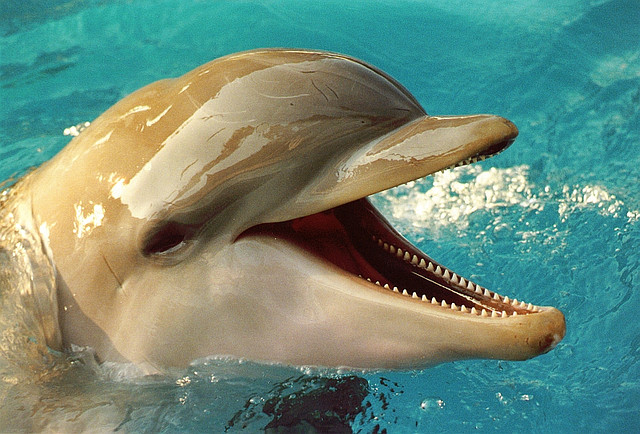
Photo: MyDifferentDrum
Like humans, dolphins and whales are smart, sociable, have complex cultures and have rich inner lives. Should they therefore be considered non-human persons, with full legal rights?
This is the argument animal rights advocates are making, as laid out by Wired:
“The problem so far is that all nonhuman animals are seen as being legal things,” said Steven Wise, an animal law scholar and attorney. “If you’re a legal person, you have the capacity to have rights. That’s the fundamental problem we intend to attack.”
This sentiment is embodied by the Nonhuman Rights Project, an organization Wise founded in 2007 to seek legal rights for species other than humans. Wise cites the 1772 trial of James Somerset, who became the first black human to be recognized legally as a person by the British government.
At the trial’s beginning, Somerset was legally considered a thing, not even permitted to speak on his behalf. At its end, he was a person. The case used by Somerset’s lawyers was an inspiration to Wise, and by the end of 2013 the Nonhuman Rights Project plans to file two lawsuits on behalf of individual animals held in captivity in the United States.
Whether the Nonhuman Rights Project’s first case will involve a cetacean is yet to be determined. If personhood is defined by character rather than chromosomes, many creatures would be eligible: Great apes are intelligent, empathic and emotional, as are elephants. But perhaps the most vocal support exists for cetaceans.
Cetaceans most exemplify Wise’s point. Their large brains are just as complex as ours. Experiments have yielded evidence that they undertake abstract reasoning and symbolic understanding. They have rich social lives with distinct dialects, cultures and rituals.
Researchers compare differences between cetacean populations to differences between traditional human tribes. It’s even possible to imagine that cetaceans, some of whom live as long as humans and spend their entire lives with a single family, have social sensitivities as pronounced as our own.
Animals, of course, are in general still viewed as objects by the law. (A notable exception is Spain, where apes have been granted some form of rights, and in the US and UK, experimentation on them is limited by law or convention.) There are also animal cruelty restrictions, but Wise argues that that isn’t enough for dolphins and whales.
In the 30 years since Wise began working in animal rights, he points out that society has shifted to a more environmentally friendly and green outlook. In his view, adding non-human legal rights to the growing field of environmental ethics would not be so radical a leap.
More from Smithsonian.com:
/https://tf-cmsv2-smithsonianmag-media.s3.amazonaws.com/accounts/headshot/Rachel-Nuwer-240.jpg)