
To Store Sunlight in Air, Just Add Water
/https://tf-cmsv2-smithsonianmag-media.s3.amazonaws.com/accounts/headshot/Sarah-Laskow-240.jpg)
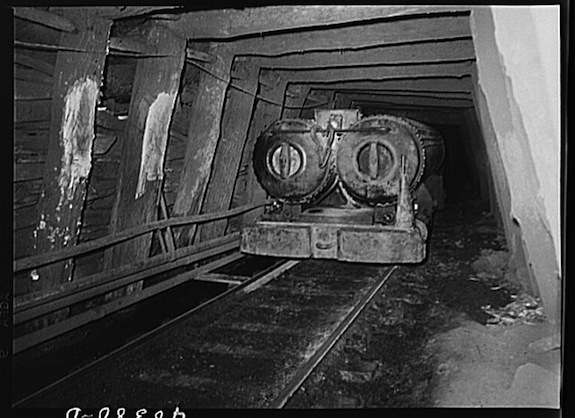
A compressed air engine. Photo: Library of Congress
Back in the late 19th century, pneumatic power — energy stored in compressed air — was popular in Paris, where a system of pipes fueled motors, elevators and other small machines, and in industrial towns like Birmingham, England. Now, a 24-year-old inventor who first attended college at age 12 is using the same technology to store energy collected by solar and wind installations. Danielle Fong made an important tweak to compressed air systems, though. As Wired reports, she just added water:
Current systems often lose more than 50 percent of the power originally put into them, since they use the released energy to run a generator — which only loses more power….
LightSail’s prototype sprays a dense mist into the compressed air tanks, and this absorbs the heat produced during compression. Water can store heat far more efficiently than air, and with this mist, Fong says, the prototype more easily stores and releases power. It heats up the tanks to temperatures that are only about 10 to 20 degrees warmer than the environment, as opposed to several thousand degrees.
It must have been a little discouraging when the Department of Energy’s Advanced Research Projects Agency turned down LightSail’s grant application. (It’s reasoning, according to Wired: “She and her team were unfit to manage a company…the idea wouldn’t work anyway…her air compressor would likely explode.” Fong managed to find $15 million in funding anyway, proving once again that Parisians are ahead of their time.
More from Smithsonian.com:
The Boston Globe of 1900 Imagines the Year 2000
/https://tf-cmsv2-smithsonianmag-media.s3.amazonaws.com/accounts/headshot/Sarah-Laskow-240.jpg)