
New Maps Will Keep Ecotourists From Ruining Dolphins’ All-Important Naps
Ecotourists in Hawaii might be inadvertently harming the very dolphin species they hope to interact with by interrupting essential daytime naps
/https://tf-cmsv2-smithsonianmag-media.s3.amazonaws.com/accounts/headshot/Rachel-Nuwer-240.jpg)
/https://tf-cmsv2-smithsonianmag-media.s3.amazonaws.com/filer/20120829094008spinner-dolphin.jpg)
For many, a trip to Hawaii can’t be dubbed a success without sighting a few playful, agile dolphins frolicking off the islands’ shores. Divers especially delight at the opportunity to swim with the friendly aquatic mammals, and eco-tourism operations often target areas housing known populations of spinner dolphins—a small dolphin species that delights viewers with graceful tumbles and freewheels.
But ecotourists in Hawaii might be inadvertently harming the very dolphin species they hope to interact with by interrupting the animals’ essential daytime naps. New maps identify dolphin snoozing hot spots, however, and researchers hope to warn tourists to steer clear of thse areas during peak dolphin resting periods throughout the day.
“Spinner dolphins are increasingly interacted with in Hawaii, and it disrupts their rest,” says David Johnston, a marine scientist at Duke University and one of the authors of the PLoS One study. “We’ve finally quantified their resting habitats in an effect to support restrictions in how people access them during critical rest periods.”
Dolphin life isn’t all play; at some point, the animals have to sleep, too. For spinner dolphins, that usually involves several naps throughout the day. And that’s where the problem starts. With hoards of tourists motoring by and crowding the waters with snorkels and dive gear, dolphins trying to catch a few daytime zzz’s might be driven away from the safety of Hawaii’s sheltering coast and into deeper waters where they may be easy pickings for predators. Those that do stick around suffer from the ill effects of insomnia, and in their sleep-deprived state, they’re less able to cope with daily demands, including foraging for food and communicating.
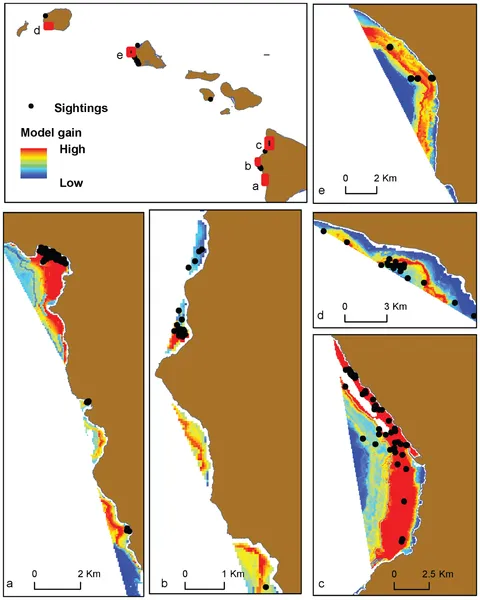
To try and relieve this problem, scientists from Duke and Stony Brook universities developed a new map that they hope will limit the number of human disturbances to the sleepy spinner dolphins. The authors identified 21 bays along the main Hawaiian islands’ western coastlines where resting dolphins spent their afternoons. To figure out which bays were most inviting for a drowsy dolphin, they took into consideration factors such as water depth, calmness, proximity to foraging grounds and bay size They overlaid that material with hundreds of spinner dolphin sightings from 2000 to 2010.
Reports of tourists interacting with dolphins has increased over the past few years, but scientists are still not sure how or whether this may be impacting the dolphin populations. The researchers recommend erring on the side of caution, however, in order to minimize any potential threats to the dolphin’s ability to survive.
“We may be able to minimize detrimental effects on dolphins by putting restrictions or preventative measures into place in a relatively small number of bays, rather than limiting access to dolphins along the entire coast,” lead author Lesley Thorne, a marine scientist at Stony Brook University, said in a statement. “That benefits tourists and tourism operators as well as the dolphins.”
More from Smithsonian.com:
Under the Sea with Dolphins
Endangered Dolphins in New Zealand
/https://tf-cmsv2-smithsonianmag-media.s3.amazonaws.com/accounts/headshot/Rachel-Nuwer-240.jpg)