
A Solar Eclipse, As Seen From the Surface of Mars
Advances in space exploration has changed the way we see eclipses
/https://tf-cmsv2-smithsonianmag-media.s3.amazonaws.com/accounts/headshot/smartnews-colin-schultz-240.jpg)
/https://tf-cmsv2-smithsonianmag-media.s3.amazonaws.com/filer/2012091810101009_18_2012_mars-eclipse-phobos.gif)
Across astronomy’s long history, one event in particular has captured our imagination—the eclipse. Stronghenge may have been used to predict the eclipse, and the world’s first computer, built in 100 BC, was designed to calculate it. Now space exploration has brought us to the point where it is possible to watch a solar eclipse from the surface of another planet. Just a few days ago, a camera aboard the Curiosity rover caught images of Mars’ moon Phobos passing in front of the Sun.
Wired, which used those images to create the animation below, says that “ecause the tiny moon moves so fast through the Martian sky, the alien eclipse lasted only a few seconds.”
This is not the first eclipse seen from Mars, nor is it the only unique perspective offered up by our recent ventures into space.
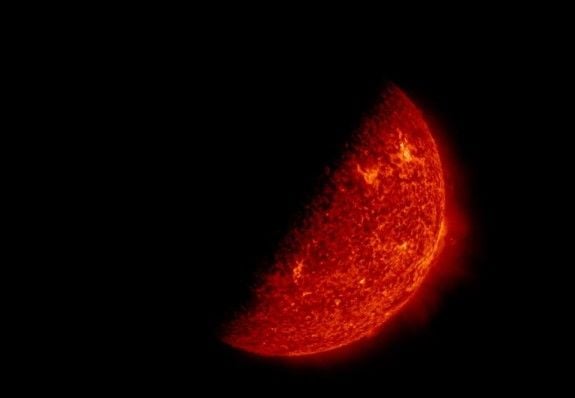
Late last week, NASA’s orbiting Solar Dynamics Observatory, the provider of some of the most beautiful images of our star ever produced, caught Earth passing in front of the Sun.
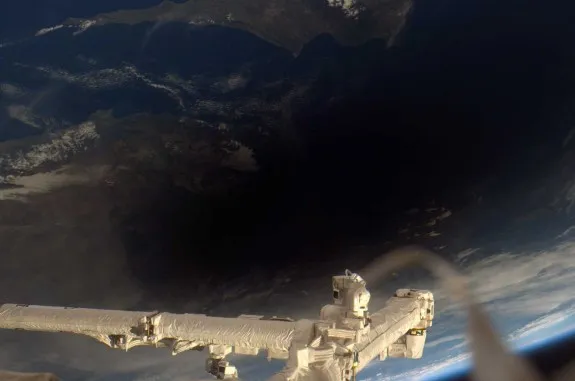
Even the humble solar eclipse to which we’re all accustomed, whereby the Moon blocks our view of the Sun from here on Earth, has been given a new spin. A few years ago, astronauts aboard the International Space Station captured the trail of the Moon’s shadow. Similar views have come to us from the Mir space station and from satellites orbiting overhead.
More from Smithsonian.com:
International Space Station Cameras Will Bring Earth to You, Live, 24/7
/https://tf-cmsv2-smithsonianmag-media.s3.amazonaws.com/accounts/headshot/smartnews-colin-schultz-240.jpg)