
Plants Won’t Help Fight Global Warming As Much As We’d Thought
A long-running experiment has found that more carbon dioxide does not necessarily mean more plant growth
/https://tf-cmsv2-smithsonianmag-media.s3.amazonaws.com/accounts/headshot/smartnews-colin-schultz-240.jpg)
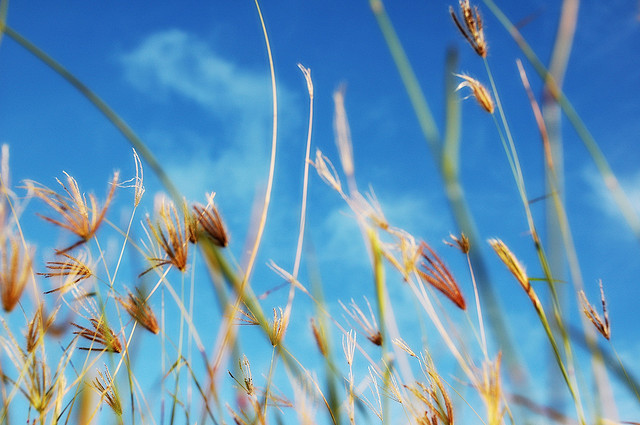
Photo: Darice de Cuba
The incredibly complex science underpinning our understanding of climate change can be boiled down to a simple calculation: some processes produce carbon dioxide, like forest fires or burning fossil fuels, and some soak it up, like plant growth. For those trying to interpret the global carbon budget, a key question revolves around how much carbon dioxide a tree or moss or shrub can pull from the air. A large-scale experiment, running for more than a dozen years, has found that this value may be much less than some scientists had anticipated.
Think of atmospheric carbon as household budget: this new finding is like your boss handing down a pay cut. All of a sudden, it’ll be just that much harder to make ends meet. Nature:
As carbon dioxide levels in the atmosphere continue to climb, most climate models project that the world’s oceans and trees will keep soaking up more than half of the extra CO2. But researchers report this week that the capacity for land plants to absorb more CO2 will be much lower than previously thought, owing to limitations in soil nutrients.
In the Cedar Creek Ecosystem Science Reserve in Minnesota, scientists have set up 296 experimental grassland plots to test the effects of different combinations of plants, carbon dioxide levels and nitrogen levels on plant growth rates. The experiment has been running since 1992, and throughout that time researchers have found that the effect of heightened carbon dioxide levels on plants can go through a couple of different phases.
For the first couple years, scientists found that the grasslands followed along with the idea of the “carbon fertilization effect.” Since plants use carbon dioxide to drive photosynthesis and to grow, more carbon dioxide means more plant growth. This little uptick in carbon consumption didn’t last for long, however.
After two years, plant growth became limited by the availability of nitrogen in the soil. Standard plant food you’d pick up at the store is rich in nitrogen, potassium and phosphorous, each a necessary fuel for plant growth. So even with a bursting supply of carbon dioxide, no nitrogen means no growth.
In the new study, scientists Peter Reich and Sarah Hobbie looked back on the extensive 13-year set of observations from the experimental plots. What they found was that in the grass plots that didn’t have extra nitrogen being added, plant growth was only half as much as for plots with lots of nitrogen, even when both had extra carbon dioxide. Though this idea of nitrogen-limited growth has been around for quite some time, there have not been many long-term in-the-field studies to show it.
More from Smithsonian.com:
Phenomena, Comment and Notes
Gas Guzzlers
/https://tf-cmsv2-smithsonianmag-media.s3.amazonaws.com/accounts/headshot/smartnews-colin-schultz-240.jpg)