
Safe from Sandy? Help a Hurricane Researcher
If the worst of Hurricane Sandy has passed you by and you’re safe and dry, think about helping a researcher out
/https://tf-cmsv2-smithsonianmag-media.s3.amazonaws.com/accounts/headshot/Rose-Eveleth-240.jpg)
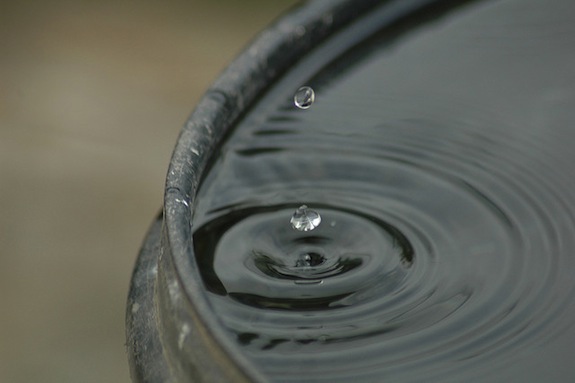
Image: pranavsingh
If the worst of Hurricane Sandy has passed you by and you’re safe and dry, think about helping a researcher out. Professor Gabe Bowen wants you to collect some rain water so that he can test the isotopes in the water. Motherboard writes:
Professor Gabe Bowen saw an opportunity in Hurricane Sandy. While he has no desire to put anyone in danger, he did realize that this “frankenstorm” presented an interesting phenomena worth studying, and that stable isotopes in the water (remember both hydrogen and oxygen have stable isotopes) could help him answer questions about how water is being moved around inside this giant storm system. But to start answering those questions he’d need data, and what better way to get that data than to crowdsource it?
Of course, don’t sample if it would be unsafe in any way. But if you’re safe and game, here’s how:
- Be safe
- Start collecting precipitation as soon as possible
- Try to collect a separate ‘integrated’ sample over each 12-hour period from 8am to 8pm
- Each time you sample, fill a sample container w/ water from your collector, seal it securely, label it w/ an ID and record the info requested in the spreadsheet
- See the letter for suggestions for sample collection devices and sample containers
- Keep on sampling and hang onto your samples until we get in touch later in the coming week
What’s up with isotopes? Well, isotopes can tell us all sorts of stuff. Bowen’s blog explains:
Stable water isotopes provide an incredibly useful tool for establishing connectivity of water resources. Hydrologists and hydrogeologists have been using water isotopes as a component of mixing and recharge models for decades, and a variety of intellectual and practical applications have been developed. Spatial analysis of water isotope data in a GIS environment, however, is a new endeavor, and current developments in this area are well-timed to take advantage of the recent emphasis on catchment to basin-scale hydrology. Our work has involved studies of the geospatial distribution of surface water (Dutton et al., 2005) and tap water (Bowen et al., 2007) isotope ratios to investigate the hydrological connectivity between water resources and hydro-climatic sources.
And that’s just one of many uses, he says. So help a scientist out, and go collect some rain water.
More from Smithsonian.com:
Top Ten Most Damaging U.S. Hurricanes
Tracking the Twists and Turns of Hurricanes
/https://tf-cmsv2-smithsonianmag-media.s3.amazonaws.com/accounts/headshot/Rose-Eveleth-240.jpg)