
Should All Students Be Forced to Learn Computer Science?
Kids these days are computer wizzes, but they don’t actually know how computers work.
/https://tf-cmsv2-smithsonianmag-media.s3.amazonaws.com/accounts/headshot/Rose-Eveleth-240.jpg)
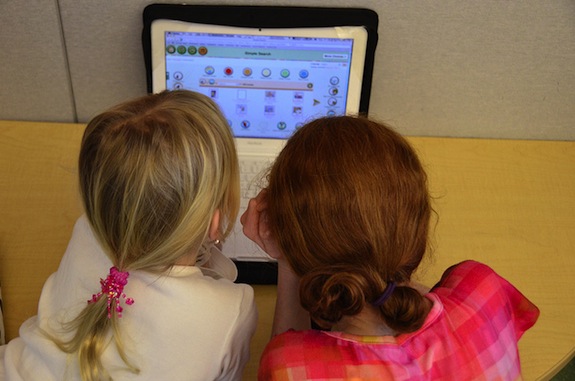
Image: Karen Blumberg
When was the last time you went for a day without using a computer? Probably not too long ago. (And you were probably on vacation at the time.) Kids these days are computer wizzes, but they don’t actually know how computers work. A recent blog at Real Clear Science argues that kids shouldn’t just be able to use computers better than their parents, they should be required to take computer science and understand how the technology works. They write:
Despite the ubiquity of computers in society, computer science is glaringly absent from K-12 education. In 2010, only nine states counted computer science as a core graduation credit and none required it as a condition of a student’s graduation.
There are benefits to computer science education that span far beyond simply being able to log into Facebook. KQED summarizes:
Studies have repeatedly shown that early exposure to science, technology, engineering and math (STEM) subjects is important in convincing students to think about STEM careers. Earlier this year, Microsoft surveyed some 500 college students pursuing STEM degrees, and nearly four out of five of them said they had made the decision to be a STEM major in high school or earlier. One in five said they made the decision in middle school or earlier. These students pointed to the influence of a particular teacher or a particular class as sparking their interest — notably, almost 70% of girls said this was what made them decide to study STEM (versus just 51% of boys).
The (obviously skewed) world of online bloggers tends to agree. Douglas Rushkoff has a book called Program of Be Programmed. You can guess its thesis. Nathaniel Heller of Global Integrity writes the following about computer science:
- Computer-based logic and processing is increasingly the language of how things gets done in the world. Want kids to understand how the banking system, consumer goods retailing, and logistics all work? Understanding basic databases is a great place to start.
- English is increasingly the language of world business. With the exceptions of Spanish and French, do you know lots of friends whose German comes in handy regularly? The Chinese government requires English training for their tens of millions of students. That’s a clue: English + French/Spanish + computer science is the way forward to be as multilingual as most people need to be in the world ahead.
- Understanding how computers think helps to beat the system. Annoyed with email spam, hyper-targeted consumer marketing and the like? Computers don’t make mistakes, but their algorithms are often simple to master once you understand the underlying logic and data model. Know your enemy.
So while the online world has spoken, there are big challenges to actually changing the way the educational system works. Here’s Real Clear Science again:
The public education system is a beast not easily altered. Encumbered by a glut of competing interests, there’s simply no easy way for it to advance from its static position, no matter how positive and clear the direction.
Maybe once our teachers are replaced with robots, kids will finally learn some computer science.
More from Smithsonian.com:
Cat Brain Inspires Computer Design
With No Human Supervision, 16,000 Computers Learn to Recognize Cats
/https://tf-cmsv2-smithsonianmag-media.s3.amazonaws.com/accounts/headshot/Rose-Eveleth-240.jpg)