Blogs

  • News
  • |
  • Art
  • |
  • History
  • |
  • Food and Travel
  • |
  • Science
SmartNews

Keeping You Current

Around the Mall

Scenes and sightings from Smithsonian museums and beyond


October 24, 2012 8:33 am

There’s No Such Thing As Espresso

Few can deny the invigorating pleasure of a strong shot of espresso to start the day. But what, exactly, is this bitter blend? Popular Science argues that espresso is a widely misunderstood beverage, and difficult to define.

Surprisingly, there is no real definition of espresso–there are certainly elements that the experts agree on, but there are no codified guidelines, no explicit recipes.

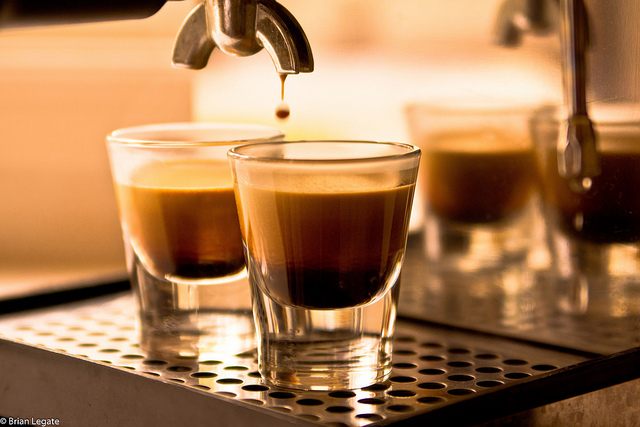
Espresso connoisseurs do agree, however, that espresso is: concentrated, thick, coffee-based, topped with a layer of dense foam and created with a machine that forces hot water through a basket of tightly packed, finely ground coffee at very high pressure.

“Espresso” may also serve as a blanket term for the process that creates this mystery-shrouded beverage.

On the other hand, espresso is not: a type of bean, the same thing as strong coffee, pronounced “expresso” or  likely to ever arrive at a single, unified definition.

One thing the espresso aficionados do agree on, though, is the uncompromising importance of the equipment that produces their caffeinated cafe-staple of choice:

It’s hard to nail down what is and is not espresso when there’s no definition, but everyone I spoke to agreed that pretty much every home espresso maker that costs less than $1,000 is incapable of producing enough pressure, power, and consistency of temperature to produce a shot anywhere near the level of tastiness that a proper commercial machine can make, though some were more disdainful of home machines than others.

But as Smithsonian wrote recently on the Design Decoded blog, there is also a necessary human element behind the mix:

Over more than a century, the espresso machine has been drastically improved, with electrical components, computerized measurements, and portable pneumatics. But as with the finest objects of design, science and technology is not enough. There is an art to the espresso as well. The talent of the barista is as important as the quality of the beans and the efficiency of the machine. Indeed, it is said that a good espresso depends on the four M’sMacchina, the espresso machine; Macinazione, the proper grinding of a beans –a uniform grind between fine and powdery– which is ideally done moments brewing the drink; Miscela, the coffee blend and the roast, and Mano is the skilled hand of the barista, because even with the finest beans and the most advanced equipment, the shot depends on the touch and style of the barista.

More from Smithsonian.com:

Across the Country, It’s All Happening at the Coffee House 
Coffee Pods, an Instant Classic 


***

Sign up for our free email newsletter and receive the best stories from Smithsonian.com each week.

8 Comments »

  1. “…every home espresso maker that costs less than $1,000…” – Oh, bother! I have a $50 Krupps and it makes a fine cup of Joe, which is basically all I ask for in life.

    Comment by Penguin Pete — October 24, 2012 @ 12:35 pm


  2. @Penguin You are looking for the article “There is no such thing as a ‘Cup of Joe’”

    Comment by JoJoMa — October 24, 2012 @ 2:03 pm


  3. I highly doubt this article polled a lot of knowledgeable coffee drinkers. Nespresso machines are used in large numbers, especially across Europe and in restaurants and hotels, do not cost over $1000 and are know to produce consistently good shots.

    Comment by jon — October 24, 2012 @ 5:11 pm


  4. Pop Sci is wrong. The Italians have defined a specific process for creating espresso and Italian barista have to become certified to follow that procedure. They have defined what espresso is.

    Comment by Alfie — October 24, 2012 @ 8:44 pm


  5. Popular Science is employing shoddy researchers, otherwise they would have known about the Istituto Nazionale Espresso Italiano before suggesting there are no codified guidelines. Look it up: it’s all there in detail with an organization body that supports it.

    Comment by greg — October 24, 2012 @ 10:41 pm


  6. This article is sadly ill informed. There are many great organisations that define with clarity the ingredients, recipe and methodology for producing bona fidae espresso.

    I say this with my passion and belief and involvement both as board member of the UK Beverage Standards Association and Certified Technical and Sensory Judge with UKBC and member of SCAE UK chapter.

    I’m not bitter and neither is good espresso!!!!

    Comment by Angus McKenzie — October 25, 2012 @ 11:50 am


  7. It is clear that the USA cannot make good coffee! It does not know that affordable machines are now available to make espresso at home. I use Nespresso. It is also clear that people in the UK and Italy, at the very least, can define an espresso.

    Alternatively, the researchers at the Smithsonian are not up to standard. Either way, you lose!

    Comment by Ian G — October 26, 2012 @ 8:29 pm


  8. Espresso does not use foam as stated. Cappuccino has foam and lattes have steamed milk.

    Comment by grumpygramma — November 1, 2012 @ 12:50 am


RSS feed for comments on this post. TrackBack URI

Leave a comment

Comments are moderated, and will not appear until Smithsonian.com has approved them. Smithsonian reserves the right not to post any comments that are unlawful, threatening, offensive, defamatory, invasive of a person's privacy, inappropriate, confidential or proprietary, political messages, product endorsements, or other content that might otherwise violate any laws or policies.

Spam protection by WP Captcha-Free

Advertisement


Trending Today New Research Cool Finds

Follow Us

Travel with Smithsonian


Advertisement