
Want to Eat a Triceratops? Try Ripping its Head Off
Recent research has uncovered how the Tyrannosaurus probably ate the Triceratops: head first
/https://tf-cmsv2-smithsonianmag-media.s3.amazonaws.com/accounts/headshot/Rose-Eveleth-240.jpg)
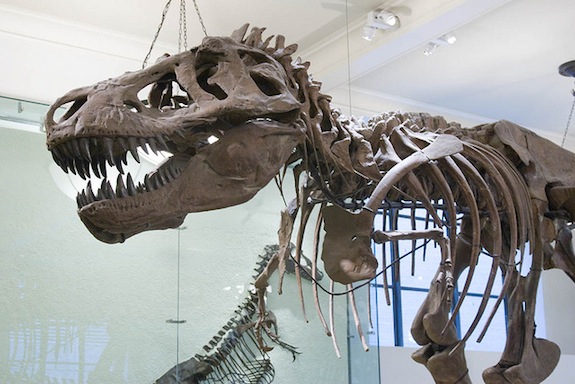
Image: Ken Zirkel
Let’s say you’re a Tyrannosaurus. You’ve just taken down a Triceratops, good work. Now, its still-warm body is laying there before you, full of delicious meaty goodness. But how do you actually eat it? Triceratops have thick skin and bony plates that make even their dead bodies difficult to handle. And you, the Tyrannosaurus, don’t have the best arms for pulling your prey apart.
Turns out, how the Tyrannosaurus ate the Triceratops isn’t entirely clear. But recent research has uncovered how it probably happened: head first. Nature News spoke with Denver Fowler who did the research:
“It’s gruesome, but the easiest way to do this was to pull the head off,” explains Fowler with a grin. The researchers found further evidence to support this idea when they examined the Triceratops occipital condyles — the ball-socket head–neck joint — and found tooth marks there too. Such marks could only have been made if the animal had been decapitated.
They figured that out because when they looked at Triceratops bones, they noticed that a lot of bite marks around the head weren’t healed at all. Which means they must have happened after the poor beast was dead. You can see the whole grizzly scene unfold in coloring book–style cartoons at Nature.
The Tyrannosaurus had a taste for the tender meat, too. Nature says:
It also shows that Tyrannosaurus also had a daintier side. Fowler and his team found precise, even delicate, bites along the front of several Triceratops skulls, and suggest that these are nibbles on the tender meat found on the face.
No arms required.
More from Smithsonian.com:
Dinosaur Sighting: Granger’s Dinosaurs
Dinosaur Sighting: Delicious Dinosaurs
/https://tf-cmsv2-smithsonianmag-media.s3.amazonaws.com/accounts/headshot/Rose-Eveleth-240.jpg)