
The Pope’s Tweets Are Official Church Doctrine
The pope is officially Tweeting now, under the handle @pontifex, and his Tweets are officially “part of the church’s magisterium.” Which means that anything he Tweets is the teaching authority of the Catholic Church
/https://tf-cmsv2-smithsonianmag-media.s3.amazonaws.com/accounts/headshot/Rose-Eveleth-240.jpg)
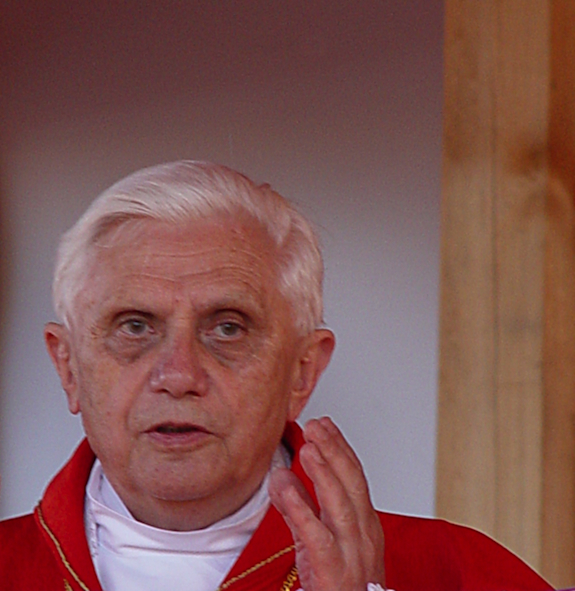
Image: Janusz Stachoń
The pope is officially on Twitter now, under the handle @pontifex, and his tweets are officially “part of the church’s magisterium.” Which means that anything he tweets is the teaching authority of the Catholic Church.
A lot of what the pope says falls into the category of the magesterium, according to the Dogmatic Constitution of the Church of Christ, which says:
…that the Roman Pontiff, when he speaks ex cathedra, that is, when carrying out the duty of the pastor and teacher of all Christians by his supreme apostolic authority he defines a doctrine of faith or morals to be held by the universal Church, through the divine assistance promised him in blessed Peter, operates with that infallibility with which the divine Redeemer wished that His church be instructed in defining doctrine on faith and morals; and so such definitions of the Roman Pontiff from himself, but not from the consensus of the Church, are unalterable.
One reason why the pope’s entry into Twitter is surprising: not that long ago, during his annual message for the World Communications Day, he told everyone on social media to be quiet . He wrote:
The process of communication nowadays is largely fuelled by questions in search of answers. Search engines and social networks have become the starting point of communication for many people who are seeking advice, ideas, information and answers. In our time, the internet is becoming ever more a forum for questions and answers – indeed, people today are frequently bombarded with answers to questions they have never asked and to needs of which they were unaware. If we are to recognize and focus upon the truly important questions, then silence is a precious commodity that enables us to exercise proper discernment in the face of the surcharge of stimuli and data that we receive.
And, in fact, the pope has Tweeted before, saying “Dear Friends, I just launched News.va Praised be our Lord Jesus Christ! With my prayers and blessings, Benedictus XVI.” The pope also has several other social media accounts, like a YouTube channel and a number of Facebook apps.
This time, however, it’s all official. Quartz writes:
The pope will also be tweeting in at least six other languages: German, Spanish, Italian, Polish, Portugese, and Arabic. It’s also been reported he’ll be tweeting in French, but that account does not appear to exist yet, and given that it’s suspended, someone may have already tried to claim it. As in real life, Twitter already has its share of false popes.
So far the pope has around 85,000 followers (of the 1.2 billion Catholics walking the Earth). But the pope won’t be tweeting his own tweets, says Reuters:
Benedict will be pushing the button on his first tweet himself on December 12 but in the future most will be written by aides and he will sign off on them.
But while the pope will be one of the world’s most high-profile tweeters and have many followers, he will not be following anyone himself.
“This is the new market of ideas and the Church has to be there. We want to use any method to spread the message. It’s cost-effective and not very labor intensive and it is aimed at young people,” Burke said.
This is a far cry from how popes used to communicate with the common people: generally, they spoke through the church hierarchy of Bishops. Sometimes the pope would put out a papal bull—a letter that communicated the thoughts of the pope. But they were far longer than 140 characters.
More from Smithsonian.com:
Does Rugby Predict Pope’s Doom?


/https://tf-cmsv2-smithsonianmag-media.s3.amazonaws.com/accounts/headshot/Rose-Eveleth-240.jpg)