
Video Games Are Officially Art, According to the MoMA
The Museum of Modern Art bought 14 video games last week to add to their permanent collection - making video games not just interesting anthropological artifacts, but also a form of art
/https://tf-cmsv2-smithsonianmag-media.s3.amazonaws.com/accounts/headshot/Rose-Eveleth-240.jpg)
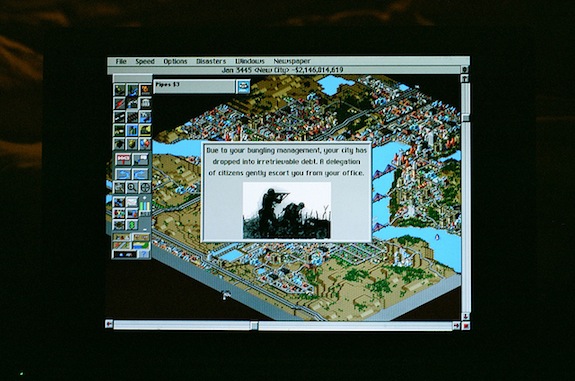
Sim City 2000. Image: Adams Carroll
The Museum of Modern Art bought 14 video games last week to add to its permanent collection—making video games not just interesting anthropological artifacts but also a form of art. According to a press release, the museum would like to snatch up about 40 games but so far has the following:
• Pac-Man (1980)
• Tetris (1984)
• Another World (1991)
• Myst (1993)
• SimCity 2000 (1994)
• vib-ribbon (1999)
• The Sims (2000)
• Katamari Damacy (2004)
• EVE Online (2003)
• Dwarf Fortress (2006)
• Portal (2007)
• flOw (2006)
• Passage (2008)
• Canabalt (2009)
Future prospects include things like The Legend of Zelda, Street Fighter, Animal Crossing, Super Mario 64 and Minecraft. You might notice that on this first list there isn’t a single Nintendo game: word is that the museum is still hammering out a deal with the video game giant. MoMA writes:
Are video games art? They sure are, but they are also design, and a design approach is what we chose for this new foray into this universe. The games are selected as outstanding examples of interaction design—a field that MoMA has already explored and collected extensively, and one of the most important and oft-discussed expressions of contemporary design creativity. Our criteria, therefore, emphasize not only the visual quality and aesthetic experience of each game, but also the many other aspects—from the elegance of the code to the design of the player’s behavior—that pertain to interaction design. In order to develop an even stronger curatorial stance, over the past year and a half we have sought the advice of scholars, digital conservation and legal experts, historians, and critics, all of whom helped us refine not only the criteria and the wish list, but also the issues of acquisition, display, and conservation of digital artifacts that are made even more complex by the games’ interactive nature. This acquisition allows the Museum to study, preserve, and exhibit video games as part of its Architecture and Design collection.
Smithsonian American Art Museum displayed video games as art last year in its exhibit The Art of Video Games. They write:
The Art of Video Games is one of the first exhibitions to explore the forty-year evolution of video games as an artistic medium, with a focus on striking visual effects and the creative use of new technologies. It features some of the most influential artists and designers during five eras of game technology, from early pioneers to contemporary designers. The exhibition focuses on the interplay of graphics, technology and storytelling through some of the best games for twenty gaming systems ranging from the Atari VCS to the PlayStation 3. Eighty games, selected with the help of the public, demonstrate the evolution of the medium. The games are presented through still images and video footage. In addition, the galleries will include video interviews with twenty developers and artists, large prints of in-game screen shots, and historic game consoles. Chris Melissinos, founder of Past Pixels and collector of video games and gaming systems, is the curator of the exhibition.
The exhibit is on tour to ten cities right now – currently living at The Boca Raton Museum of Art in Florida, and eventually traveling to Syracuse, Toleda, Memphis and other cities in the United States.
More from Smithsonian.com:
The Essentials: Video Games
The Art of Video Games
/https://tf-cmsv2-smithsonianmag-media.s3.amazonaws.com/accounts/headshot/Rose-Eveleth-240.jpg)