
Two Americans Charged in Narwhal-Tusk Smuggling Ring Bust
For the past decade, these two men have allegedly been smuggling narwhal tusks
/https://tf-cmsv2-smithsonianmag-media.s3.amazonaws.com/accounts/headshot/smartnews-colin-schultz-240.jpg)
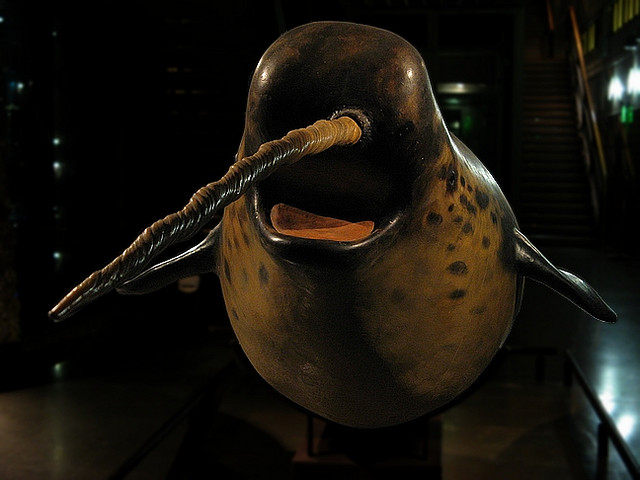
A narwhal at Paris’ Muséum national d’histoire naturelle. Photo: Photonquantique
For their involvement in what authorities claim to have been a decade-long racket, two American men were charged with smuggling the tusks of narwhals from the Canadian Arctic into Maine, says the Associated Press. The narwhals’ iconic tusks—actually an overgrown canine tooth found in males—were allegedly slipped across the border and sold on the black market to the two charged men, and others. The AP reports:
For nearly a decade, two Canadians smuggled the whale tusks into Maine and shipped them via FedEx to Zarauskas, Conrad and other unnamed American buyers, according to an indictment.
Narwhals are known as the unicorns of the sea for their spiral, ivory tusks that can grow longer than 2.44 metres. The tusks can sell for thousands of dollars each, but it’s illegal to import them into the U.S.
The court document doesn’t specify how much money was involved, but it says the Canadian sellers received at least 150 payments from tusk buyers.
Though hunting narwhals is legal in Canada, importing them to the U.S. and selling them is not, says the Atlantic Wire. According to the International Union for Conservation of Nature, the narwhal is listed as “near threatened.” They’re hard to get ahold of, even to study, as Smithsonian has reported:
Narwhals live in the cracks of dense pack ice for much of the year. They flee from motorboats and helicopters. They can’t be herded toward shore like belugas, and because they’re small (for whales) and maddeningly fast, it’s little use trying to tag them with transmitters shot from air rifles. They must be netted and manhandled, although Laidre is trying a variation on an aboriginal method, attaching transmitters to modified harpoons that hunters toss from stealthy Greenlandic kayaks.
The charges against the two alleged horn-smugglers are a testament to the unfortunate truth that if there is money to be made selling something, somebody, somewhere, will probably sell it to you, no matter how illegal.
More from Smithsonian.com:
Eating Narwhal
In Search of the Mysterious Narwhal
/https://tf-cmsv2-smithsonianmag-media.s3.amazonaws.com/accounts/headshot/smartnews-colin-schultz-240.jpg)