February 25, 2013 11:52 am
Prehistoric Humans Had Better Teeth Than We Do

Image: Jason
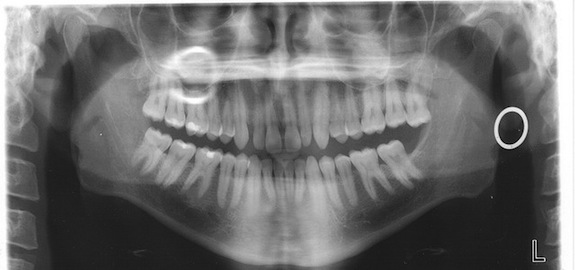
Chances are you brush your teeth every morning. You probably floss, and you might even use mouth wash. Dental hygiene is flourishing, with a multimillion dollar economy behind it. We have straighter teeth, whiter teeth, more beautiful, shimmery teeth. But it turns out that we actually have less healthy teeth than our ancestors. In fact, archaeologists say that prehistoric humans had much better teeth than we do today.
It all started with farming, says Alan Cooper, the director of the Australian Centre for Ancient DNA. His study suggests that the shift from meat, nuts and vegetables to grains and sugars has wreaked havoc in our mouths by changing the kinds of bacteria we find there. NPR writes:
The researchers found that as prehistoric humans transitioned from hunting and gathering to farming, certain types of disease-causing bacteria that were particularly efficient at using carbohydrates started to win out over other types of “friendly” bacteria in human mouths. The addition of processed flour and sugar during the Industrial Revolution only made matters worse.
So teeth-brushing, flossing and washing is simply covering up a more fundamental problem, says NPR, that we don’t have the right bacteria in our mouths anymore to keep our teeth healthy. In fact, the bacterial balance in our mouths right now has shifted towards the kinds of bacteria we don’t want‚the harmful kinds. Our body is constantly fighting them off, no matter how hard or regularly we brush.
To restore the balance, Cooper told NPR, cut the carbs and eat more like a caveman.
More from Smithsonian.com:
Shark Teeth Have Built-in Toothpaste
The Mysterious Teeth of Ostafrikasaurus
Sign up for our free email newsletter and receive the best stories from Smithsonian.com each week.
6 Comments »
RSS feed for comments on this post. TrackBack URI


What exactly do these scientists mean by “less healthy?” Most people I know who floss and brush their teeth have perfectly strong ones that do not get cavities or fall out pretty much ever.
The change in foods and/or bacteria has NOT, in fact, seemed to “wreak havoc” on anything. If your teeth are staying in place, are not in pain, and are not getting holes in them, then for all practical purposes, they are just as healthy as any other teeth. Why should I care about bacteria being different, if it doesn’t make any practical difference to me for 80+ years?
Fundamentally changing your diet to address a non-existant problem would be pretty… rash, let’s say.
Comment by Gavin — February 25, 2013 @ 4:03 pm
@Gavin, I think you’re missing the point. Cutting carbs (besides arguably being a lot better for you in every sense) is, as the author puts it, a way to ‘restore the balance’. The point is that we still can have healthy teeth on the modern low fat high carb diet, but it necessitates all the supplementary activities of brushing, flossing etc, whereas on a paleo diet, you needn’t necessarily have had to engage in such constant dietary attention. That is at least according to the proposed theory.
The article is about conveying information, putting forward a theory that might become part of our knowledge in the future, not about healthy dentistry advice, and not about making you feel inadequate with your dietary habits, although your defensiveness suggests a slight vulnerability there.
Comment by JimJones — February 25, 2013 @ 7:10 pm
I don’t get get this kind of so called research, if they were so much more healthier then we are today because of their diet, how come the average life span has increased so much over the centuries?
Comment by Dan W — February 25, 2013 @ 10:46 pm
I’m thinking that at some point all those Hollywood UV bathed teeth will crumble into powder.
Comment by John Bailo — February 25, 2013 @ 11:00 pm
Absolutely the bacteria in our mouths have everything to do with it! There are two strains of bacteria – Lactobaccilli and S. mutans– that are caries causing, or cavity causing, and they use the fermentable carbohydrates or carbs, and break it down into acid which causes decay. Just because you do not have cavities or tooth loss now, does not mean it cannot happen later… all it takes is a compromised immune system, lack of saliva, stress, and the right environment and you are at high risk for decay. And periodontal disease is a whole other issue, with Actinobacillus actinomycetemcomitans and Porphyromonas gingivalis, both the cause of aggressive forms of the disease. And sometimes brushing and flossing is not enough! Those people with aggressive perio usually need slow releasing antimicrobials inserted into the periodontal pocket for treatment and periodontal surgery, with aggressive scaling and root planing. So yes, watch the carbs and the sugar, and see your dental hygienist regularly!
Comment by selainee — February 26, 2013 @ 10:13 pm
Dan
Although the AVERAGE life span has increased, it is just that: the average. The principal causes of early death in Paleolithic times included child birth (both infant mortality and death of the mother), disease, injury, and accidental death (from a fall, animal attack, etc.) In fact, there is solid evidence in the fossil record that if you did live until your 30′s or so, you had a good chance of making it into your 70s or beyond, and in very good health. We can see a corollary in modern hunter-gather societies (the Inuit, the Kitivan, etc.) who live without a host of modern, western diseases (including, but not limited to, many types of cancer, obesity, diabetes, metabolic syndrome and so on) until western/neolithic foods (grains, sugars, vegetable oils, etc.) are introduced.
I would encourage you to read Gary Taubes’ excellent books on diet and obesity, and to do some more research on the paleo/primal eating and lifestyles. Even if you don’t make any changes in your own life, I suspect you will find much of the information interesting.
Comment by Andrew — March 3, 2013 @ 6:46 pm