
Wearing Wool, All Summer Long
Layered, corseted summer garments kept women proper and fashionable, if not cool
/https://tf-cmsv2-smithsonianmag-media.s3.amazonaws.com/accounts/headshot/emily-spivack-240.jpg)
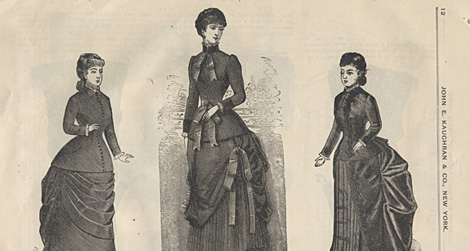

Sheep wear wool in the summer, but then again, they live in Scotland. Or Ireland. Or other cool places with low stone walls. For the rest of us, we want less fur (or fur-based fabric) on sweltering days. But, as we know from the evolution of bathing suits, that wasn’t always so. In the 19th century, modesty reigned. Case in point: this illustrated catalog, circa 1884, from John E. Kaughran & Co., a purveyor of spring and summer fashions that look like (and occasionally were) bereavement wear meant for January.
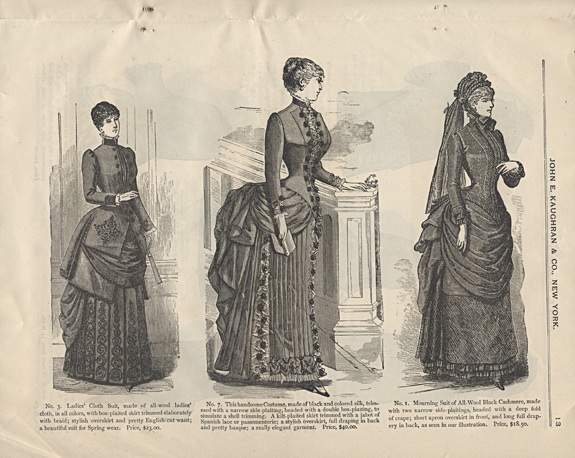
John E. Kaughran & Co. was a dry goods merchant with three locations in Manhattan, at 765, 767 and 769 Broadway, and a robust mail-order business. According to the 1884 compendium New York’s Great Industries, by Richard Edwards:
To meet the demands of the thousands of out-of-town customers, Mr. Kaughran issues a large and beautifully illustrated descriptive catalogue, which is promptly sent all over the country, and it is not only an active price list, but a fashion guide, and is highly prized by the thousands whose mail orders form an important feature of the business.

So it turns out that Kaughran’s was a fashion rag—keeping ladies from Pennsylvania to Ohio to California en mode and on trend—as much as it was a mailer for peddling dresses, cloaks and wraps, a kind of Victoria’s Secret catalogue of its day.
We modern Internet shoppers are used to purchasing sight unseen, but it still seems risky that women spent their $23 on “a very stylish and serviceable suit for Spring wear” pictured only in illustration (despite being assured that this “stylish Costume is made from cashmere or ladies’ cloth in all the newest shades and colors.”)
.
But John E. Kaughran thought otherwise, providing helpful guides for elaborate self-measurement—a couple of dozen numbers are needed for the intricate garments to provide proper fit (and coverage)—and assuring readers in the catalog’s introduction:
A careful perusal of its pages will, in no doubt, convince you of the superior inducements we offer to secure your patronage, and as the enormous volume of our business enables us to dispose of immense quantities of merchandise, the facilities which we enjoy of being able to offer them at the very lowest prices, must be apparent.
And, by the way, yes, you read that right: cashmere. In summer months, ladies wearing John E. Kaughran & Co.’s finest, were bedecked in cashmere, wool, silk and velvet. All natural, breathable fabrics, true, but layered in bustles and skirts and overskirts, braided and brocaded, and then tightly corseted for that lovely hourglass figure, it seems that Kaughran’s wares were more stylish than serviceable.
Images: Smithsonian Libraries
/https://tf-cmsv2-smithsonianmag-media.s3.amazonaws.com/accounts/headshot/emily-spivack-240.jpg)