
How Did A Group of Plumbers’ Wives Change American History?
Initially a social club, the Women’s Auxiliary grew to become one of the nation’s most influential organizations in the country
/https://tf-cmsv2-smithsonianmag-media.s3.amazonaws.com/accounts/headshot/Leah-Binkovitz-240.jpg)
/https://tf-cmsv2-smithsonianmag-media.s3.amazonaws.com/filer/20130320110057Auxiliary-Presidents_Thumb.jpg)
When the ladies auxiliary committee for the National Association of Master Plumbers first formed, it was composed entirely of men. The men were tasked with finding diverting excursions for their wives while the master plumbers association held its annual convention. In June, 1910, for example, the women enjoyed an auto ride, some shopping and a luncheon at the convention held in Chicago. But in 1919, once the auxiliary committee was finally turned over to the women, the organization, which was little more than a social club, would transform into a platform for activism and become one of the oldest women’s organizations in the country.
When the American History Museum acquired the organization’s archives, the 92-year-old collection became the most thorough documentation of a women’s group in the museum’s holdings, according to curator Cathy Keen. “We have collections that relate peripherally to women’s activism but not any one long-standing women’s organization represented in our collection.”
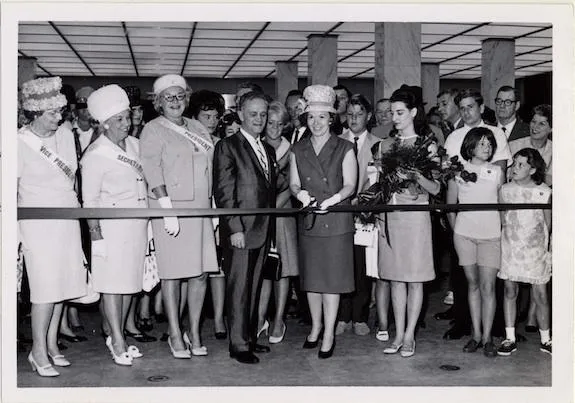
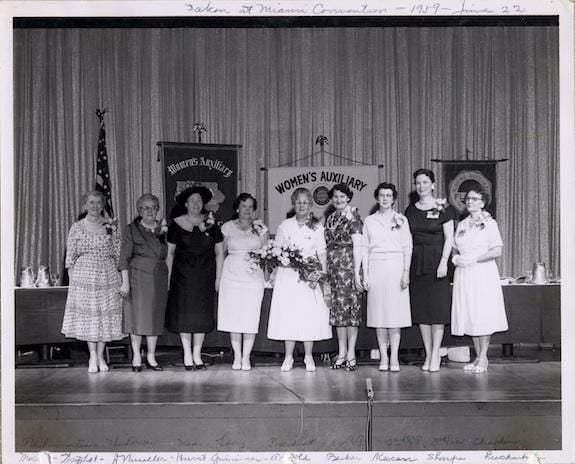
Even before acquiring the right to vote nationally, women were a part of American business from the start, including the plumbing industry. “In those days,” explains Keen, “women in the home tended to be the dispatchers and answered the inquiries, even providing estimates and things like that.” They often kept the books and helped manage their husbands’ businesses.
Over time, with the help of the Women’s Auxiliary, their role would transform from support to activism. Working in issues from the environment, sanitation and health and labor, including supporting the Family and Medical Leave Act, the women created a model for social engagement and gained valuable experience lobbying for change over the course of a century.
“They gained business experience and experience working with legislators and lobbying for causes and fundraising,” says Keen, “there are all kinds of ways that they benefited as individuals.”
One of the most notable campaigns was the group’s 1938 partnership with Texaco gas stations to improve the washroom facilities and sanitation. The company even began using its improved bathrooms in its advertising and other companies began following suit. The auxiliary similarly targeted restaurants, food handling stores and grocery stores which sometimes had no sanitary facilities available.
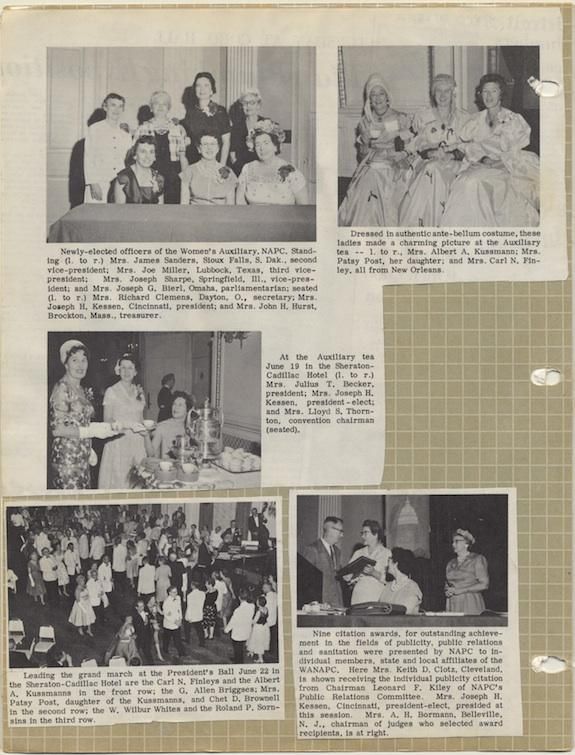
On the 50th anniversary of the organization’s founding, then president Edna Malitz wrote a column for the convention in New Orleans saying, “We have come a long way back to New Orleans-since Chicago, Illinois–28-29-30, 1910–when the “Ladies Committee” consisted of all men.”
Malitz wrote in that year’s report:
Presidents made their traveling expenses in early years by making and selling chances on handmade quilts that were real masterpieces–until 1947–when yours truly was elected president. Who, not being the quilt making type, graciously was allowed $299 from the treasury. From this gesture expenses of the Executive Board were born into today’s being.
The materials acquired by the museum include scrapbooks, account and ledger books and the annual proceedings recorded by the historian. One of Keen’s favorite finds was the photographs of people in costume for the conventions. “The conventions had a lot of ceremony and ritual to them,” says Keen. Elaborate industry and company traditions were not uncommon, according to Keen. Many even had songbooks, including the Women’s Auxiliary.
The organization is now part of the Plumbing-Heating-Cooling Contractors’ National Auxiliary and continues to raise funds for scholarships across the country and engage in social causes.
/https://tf-cmsv2-smithsonianmag-media.s3.amazonaws.com/accounts/headshot/Leah-Binkovitz-240.jpg)