
Coffee Here, and Coffee There: How Different People Serve the World’s Favorite Hot Drink
Coffee is black and bitter—but global travelers find a surprisingly wide range of forms of the world’s favorite hot beverage
/https://tf-cmsv2-smithsonianmag-media.s3.amazonaws.com/accounts/headshot/Off-Road-alastair-bland-240.jpg)
/https://tf-cmsv2-smithsonianmag-media.s3.amazonaws.com/filer/20130315021120CoffeeEspresso2.jpg)
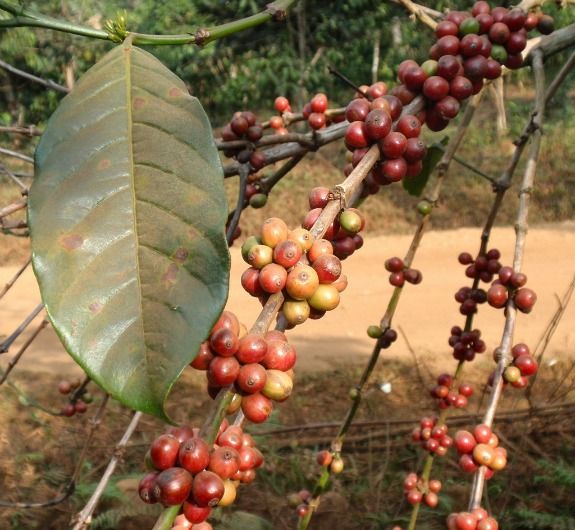
Few people anywhere begin the day without a hot drink. Chocolate and tea are popular morning jump-starters. Yerba maté, famously Argentinean, is gaining a reputation globally. Some people contrive creative blends of apple cider vinegar, herbs and honey. But coffee dominates the morning hour in every time zone. While the plant that produces the beans is native to tropical east Africa, two main species of coffee—Coffea arabica and C. canephora, or C. robusta—are now grown in nearly every tropical region. Brazil and Vietnam lead production, which amounts globally to more than 150 million 132-pound bags per year (PDF). Consumption is rising, and though coffee is far from being the world’s largest crop, it is now the second most demanded commodity after oil.
But for its simplicity in its raw state and its ubiquity in almost every culture, coffee takes a wide and unpredictable range of forms throughout the world. Here is a sampling, both bitter and sweet, of some of the regional renditions of the world’s favorite hot drink.
Italy. Perhaps nobody does coffee better than Italy. Though located many lines of latitude north of muggy coffee country, Italy has somehow attained the position of coffee lord and master. It’s here that the espresso machine had its birth, and it’s here that a coffee lover can enter nearly any establishment, whether a slick Neapolitan bar or a small nameless café in the remote Abruggio, and expect no less than the brown-black best. Never fear of instant coffee, for “cafe” in Italy is synonymous with “espresso.” Add milk, and the door to the frothy, creamy world of Italian coffee drinks opens wide. No doubt, we all owe our finest a.m. pleasures to Italy. Trivia: Espresso is big business and espresso machines serious investments—costing as much as $40,000.
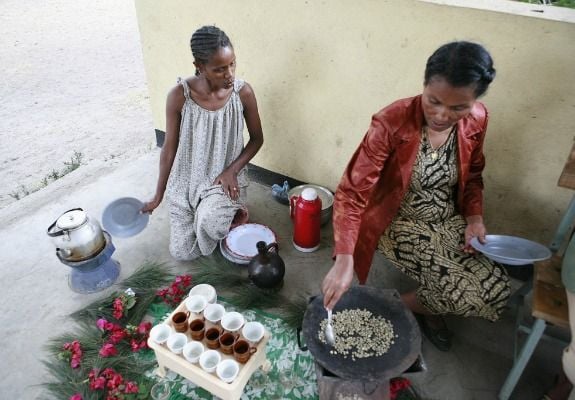
Ethiopia. This is where it all began. Ethiopia is the heart of coffee country, native homeland to the Coffea genus, and people here have been drinking coffee for more then 1,000 years. Today, coffee—called buna—is still made and served in a traditional table-side ritual that transforms the beans from raw red cherries into toasty, steaming drink, often all before the guest’s eyes. The process can last more than an hour, as the host toasts, grinds and boils the coffee before serving.
Spain. The wayfarer in Spain, rising from his bedroll on a frosty September morning and eager for warmth and company, must look no farther than the nearest church steeple. For that cross indicates that a café dwells at ground level in the plaza. There, the old men are already gathering, whether Monday or Sunday, and the silvery, steel machine is already hissing away. Go! The establishment, almost always, is called “Cafe Bar” and by 6 a.m. is buzzing with caffeine and activity. Many take their their coffee standing at the bar with a hand in their pocket. If you want milk, please don’t order a latte. Cafe con leche is your ticket. Be warned: Long sit-ins at coffee bars may still be a foreign idea in parts of rural Spain. Several years ago, in the Picos de Europa, I ordered a second coffee while letting my camera battery charge in a small café. The place was nearly empty, yet the barkeeper decided she’d had enough of me after 40 minutes. She unplugged my device, slid it across the table and pointed to the door. She all but kicked me in the rear as I hobbled out. I didn’t even have time to leave a tip.
United States. America has gained an irrepressible taste for the inky black juice of the espresso machine. But “gas station coffee,” the type that one may spot in the roadside diner by the register, ominously tea-colored and brewed hours before, is still a symbol of Americana and proudly drips from Mr. Coffee lookalikes everywhere. At the other end of the spectrum are the massive high-calorie coffee drinks innovated by Starbucks, containing varying mixes of espresso, caramel, whipped cream, chocolate, eggnog and other ingredients. The presence of such milkshake-like drinks seems to have even spurred a reaction in places. So we see, in the occasional bakery café, a note on the menu reading, “Just good, old-fashioned drip coffee,” as though we ought to be relieved.
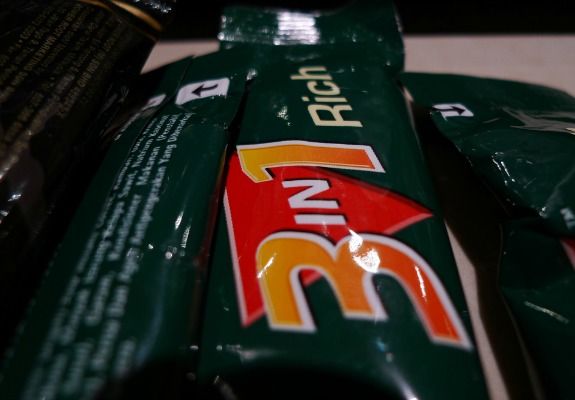
Turkey. Turkey’s favorite drink is tea, called “chai,” yet coffee is available here. In Istanbul, espresso and the associated lattes and cappuccinos are commonplace, while in the countryside, Nescafé rules—usually poured from 3 in 1 packets of instant coffee, sugar and artificial dried milk. True Turkish coffee, served in espresso-like cups, can be surprisingly hard to find. Note that what the Turks call “Turkish coffee,” the Greeks call “Greek coffee” and the Georgians “Georgian coffee.” But it’s all the same stuff—thick, gritty, tar-black juice like the emissions of a malfunctioning espresso machine. It is almost always served sweet.
Greece. The favorite coffee drink in Greece is the frappe. Made using Nescafé, a frappe is a frothed-up blend of milk, sugar and Nescafé, served over ice. The drink can be had with or without sugar, but on a warm summer day in the islands, the ice is the essence of a frappe. This is at least one instant coffee rendition that’s easy to love.
Baja California. In Baja, “coffee” seems almost to mean “hello.” Nearly every other day, during my years of Baja wandering with spear and backpack a decade ago, some strange man or woman would appear out of a shack on the dirt road ahead, wave to me and call out, “Cafe?!” Thus, I often found myself seated on a broken plastic chair or an upturned fishing bucket under a tree while my host boiled water on a mesquite fire and spooned out the Nescafé. That’s right: The drink is almost always instant coffee granules, and while the coffee itself is nothing to write home about, it’s the gesture that counts in the sparsely peopled cowboy country of Baja.
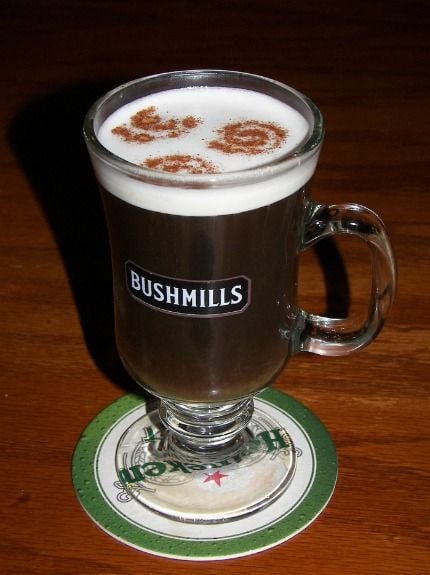
Ireland. It’s little surprise that Ireland, land of cheery pubs and frosty nights, is where coffee first got really fun. The Irish coffee was invented in the 1940s and is now a cocktail served in bars worldwide. It contains hot coffee, whiskey, sugar and whipped cream, and, while traditionally an after-dinner drink, Irish coffee may be hard to argue with on a chilly morning. But Irish coffee may not suit all tastes. Years ago, a friend of the San Francisco Chronicle‘s former travel writer Stanton Delaplane reportedly said that Irish coffee ruins three good drinks—whiskey, coffee and cream.
Vietnam. Many of us aren’t fans of sweet coffee, but Vietnamese iced coffee is delicious. Coffee drinking arrived in Vietnam with the French in the 1800s, and the local palates quickly shaped their own interpretation of the drink. Fresh milk in Vietnam was not as available as it is in the pasture lands of France, and so the cafe au lait took a sharp evolutionary turn: The Vietnamese poured their coffee over sweetened condensed milk—from a can—and served the drink over ice.
Ecuador. All bets are off when ordering coffee in Ecuador. Unless you request otherwise, they may pre-sweeten the drink for you. And if you ask for a cafe con leche, what you’ll get is a mug filled entirely with steaming hot milk, served beside a jar of instant coffee granules. And if you ask your host whether they’re serving Nescafé, they may say no—but not because they’re making coffee in a French press but simply because they are serving some other brand of instant coffee, like Buendia or PresCafe. And even in a swanky countryside bed and breakfast fitted with a dazzling espresso machine, if you order a cappuccino, they might reach for the sweetened mocha packets in the cupboard. Stay vigilant. Still other times, real coffee is available in Ecuador (they grow the stuff; why shouldn’t they serve it?) offered as cafe filtrado. Pounce on it while you can!
/https://tf-cmsv2-smithsonianmag-media.s3.amazonaws.com/accounts/headshot/Off-Road-alastair-bland-240.jpg)