Blogs

  • News
  • |
  • Art
  • |
  • History
  • |
  • Food and Travel
  • |
  • Science
SmartNews

Keeping You Current

Around the Mall

Scenes and sightings from Smithsonian museums and beyond


October 16, 2012 1:34 pm

To Increase Salmon Populations, Company Dumped 110 Tons of Iron Into the Pacific Ocean

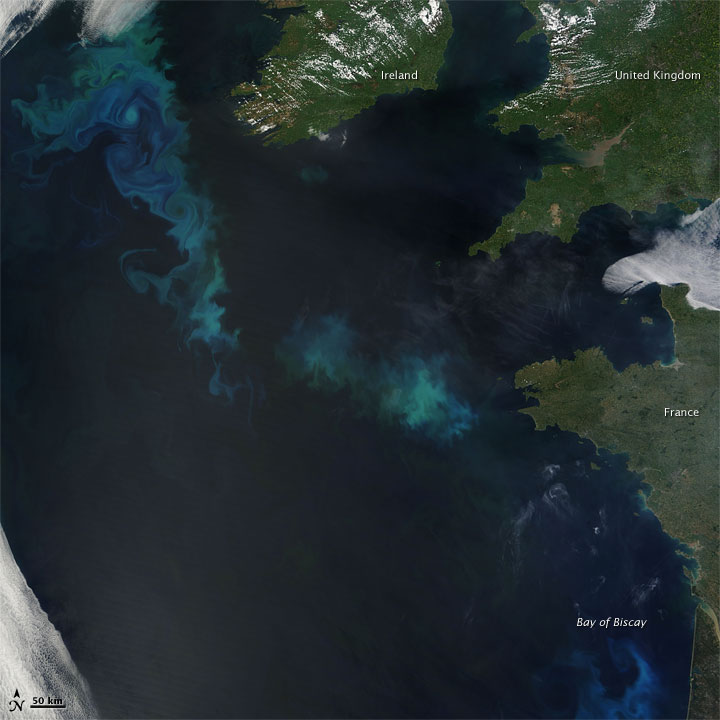
A phytoplankton bloom in the North Atlantic. Photo: Terra – MODIS / NASA Earth Observatory

About 180 miles off the coast of Haida Gawaii, an archipelago on the western shores of British Columbia, Canada, the Haida Salmon Restoration Corporation decided to dump 110 tons of an iron-based compound into the Pacific waters, says the CBC. The dump was part of a $2 million bid to drive a surge in salmon populations and is currently under investigation by Environment Canada’s enforcement branch.

The project was pitched to local residents as a way to trigger a bloom in phytoplankton through the iron fertilization effectsays APTN.  Many regions of the ocean don’t have enough iron to support all of the life that could otherwise exist, so just like adding fertilizer to the soil, adding iron to the ocean can cause a temporary boom in productivity. More iron leads to more phytoplankton, which in turn could lead to more salmon. Phytoplankton blooms also have the potential to draw carbon dioxide out of the atmosphere. According to The Guardian,

Satellite images appear to confirm the claim by Californian Russ George that the iron has spawned an artificial plankton bloom as large as 10,000 square kilometres. The intention is for the plankton to absorb carbon dioxide and then sink to the ocean bed – a geoengineering technique known as ocean fertilisation that he hopes will net lucrative carbon credits.

Though small-scale iron fertilization trials have been carried out in the past, they were designed to help scientists understand how the process works and to seek out any unintended consequences. The new dump, on the other hand, has scientists worried because of its sheer scale. As The Guardian points out, the iron dump could violate a United Nations moratorium on large-scale iron fertilization projects. On Deep Sea NewsCraig McClain details the history of the people behind the controversial event.

The CBC says that “the project is ringing alarm bells in the scientific community, because the bloom it created spread 10,000 square kilometres and was visible from space.” Maite Maldonado, speaking to the CBC, said that the commercialized dump is 100 times larger than any previous iron fertilization experiment. She said that “the process could have effects that are the reverse of those intended, as the lack of oxygen could potentially create toxic, lifeless waters.”

More from Smithsonian.com:

Is Geoengineering the Answer to Climate Change?
Phytoplankton: The “Biggest” Little Guys in the Ocean


***

Sign up for our free email newsletter and receive the best stories from Smithsonian.com each week.

6 Comments »

  1. “To Increase Salmon Populations, Company Dumped 110 Tons of Iron Into the Pacific Ocean”

    the picture is of the atlantic, haha!

    Comment by Nciholas — October 17, 2012 @ 11:35 pm


  2. The correctly labeled photo is of the phytoplankton bloom in the North Atlantic that is a result of the iron containing sand that blows off the Sahara Desert. Sure is a big natural phytoplankton bloom. Might be why George’s Bank is such a fertile fishing ground. Gosh, trying the same thing in the Pacific Ocean could be a terrible hazard to life as we know it! Let’s all shudder in fear.

    Comment by Watermellon — October 18, 2012 @ 9:10 am


  3. I think what’s going to happen is that it will increase the number of jellyfish which will eventually kill off the plankton and the small fry……and if the process continues this will lead to the oceans turning red like blood and a massive extinction of sea creatures. This might actually be happening off the China Sea. The increase of fish will be short term the disasterous effect will be long term. Hope people develop a taste for jellyfish.

    Comment by anonymoussherlock — October 20, 2012 @ 6:34 am


  4. The scientific motive for this was a 2008 volcanic eruption that dumped far more iron into the ocean than this artificial action — and resulted in a phytoplankton bloom and subsequent salmon bonanza.

    That the coverage of this event by both the Smithsonian and the National Geographic failed to mention this in their coverage indicates the loss of two great American institutions.

    Comment by James Bowery — October 21, 2012 @ 12:36 pm


  5. A two-week glacial dust storm off the Copper River delta in Alaska event in 2006, for instance produced large plumes that lofted between 30 and 80 kilotons of glacial flour into the atmosphere. Researchers described this in detail in a Geophysical Research Letters study (see http://www.agu.org/pubs/crossref/2011/2010GL046573.shtml). They estimated the mass of dust transported from the valley during the event to be between 25,000 and 80,000 tons. “We suggest the soluble Fe flux from dust originating in glaciofluvial sediment deposits from the entire GoA [Gulf of Alaska] coastline is two to three times larger, and is comparable to the annual Fe flux to GoA surface waters from eddies of coastal origin.” … so, 110 tons is literally just a drop in the bucket.

    Comment by tennisjazz — October 26, 2012 @ 4:17 pm


  6. Shoddy science? I just went through their website and it looks pretty well researched to me. Maybe people should get their news from the source before they start ringing alarm bells http://www.hsrc1.com/blog/

    Comment by scientistshannon — October 26, 2012 @ 4:31 pm


RSS feed for comments on this post. TrackBack URI

Leave a comment

Comments are moderated, and will not appear until Smithsonian.com has approved them. Smithsonian reserves the right not to post any comments that are unlawful, threatening, offensive, defamatory, invasive of a person's privacy, inappropriate, confidential or proprietary, political messages, product endorsements, or other content that might otherwise violate any laws or policies.

Spam protection by WP Captcha-Free

Advertisement


Trending Today New Research Cool Finds

Follow Us

Travel with Smithsonian


Advertisement